


Buddhist Monastery Stay with Peace and Compassion while Volunteering Abroad in 2026
Last Updated: August 12, 2026
Tweet
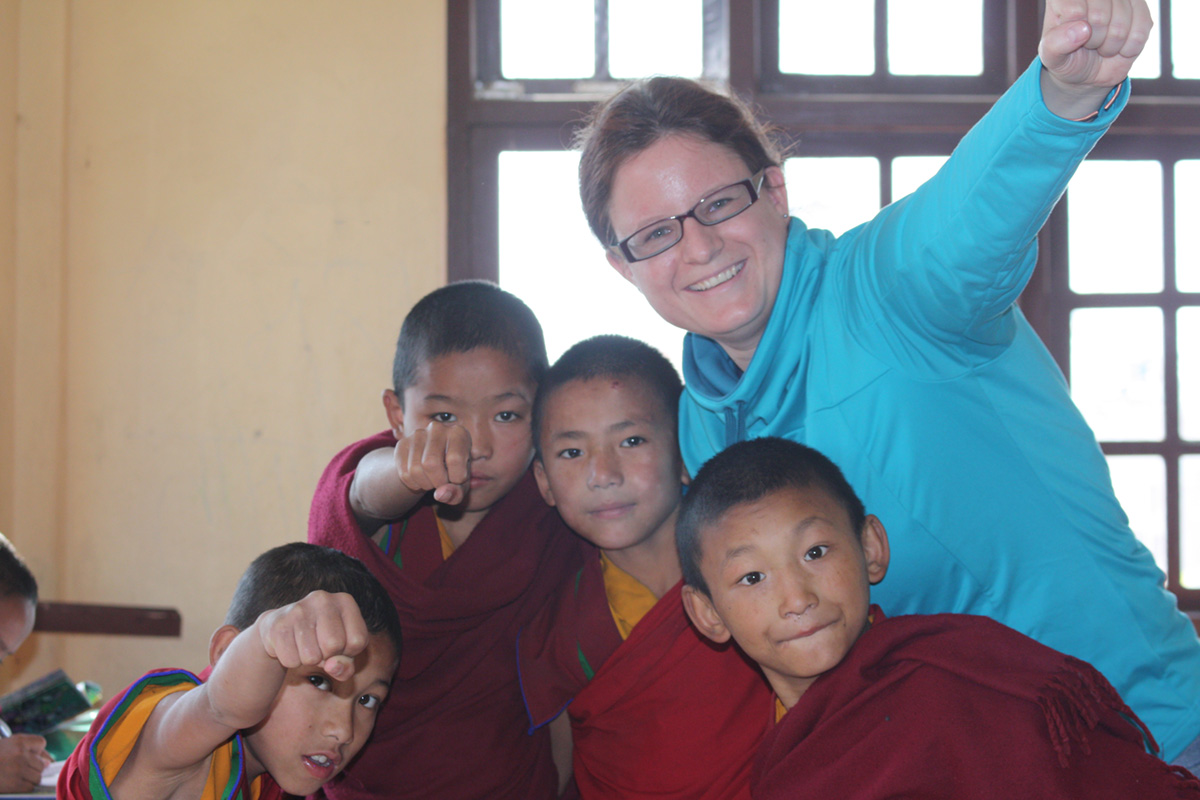
Volunteering abroad is one of the most meaningful ways to travel, learn, and share your time for a noble cause. Among many volunteer and travel abroad experiences, staying in a Buddhist monastery can be a peaceful and learning journey.
It gives you the opportunity to live in a simple environment, stay close to monks, practice meditation, and understand the values of compassion, discipline, and mindful living.
A Buddhist monastery stay is not only about finding a place to sleep while traveling. It is about learning from the monks, helping with daily works, teaching English, joining prayers, and understanding a culture that believes in simple living and inner peace.
In 2026, many travelers, volunteers, students, and spiritual seekers may look for Buddhist monastery stay programs in Nepal, Sri Lanka, India, Thailand, and other Buddhist destinations.
Buddhist Monastery Stay and Living Experience
There are several ways to experience monastery life, from short visits and meditation stays to longer volunteer placements. The right option depends on how deeply you want to join the daily routine, service, and spiritual practices.
Live in a Buddhist Monastery
To live in a Buddhist monastery is to experience a simple and peaceful way of life. You will not just visit the monastery as a tourist, but you will stay there and understand the day to day lifestyle of monks and nuns.
Please click here to get the complete details on available programs, volunteer’s roles and activities , accommodation, cost, visa , vaccination, airport arrival and the rest of it.
Get More Info Now »
While living in the monastery, you can join prayers, practice meditation, help in daily works, and learn about Buddhist culture. This experience can bring you closer to peace and compassion.
What Daily Life Is Like in a Buddhist Monastery
Daily life in a Buddhist monastery is usually simple and structured, with basic rooms, modest meals, and a regular routine. Prayer, study, work, and quiet time often shape the day.
Instead of hotel-style comfort, the experience asks you to adjust to a slower and more disciplined way of living while learning through participation.
H3: Is it possible to Live in a Monastery?
Yes, to live in a monastery means to stay away from the noise of city life for some time. It gives you the chance to spend your days in a quiet place where prayer, meditation, and service are part of daily life.
You may have to wake up early, follow the monastery rules, and help with some activities. Hence, you should join with a positive attitude and open mind.
Benefits of Living in a Monastery
Living in a monastery can strengthen discipline, patience, and appreciation for simple living. A steady routine of silence, service, and reflection can help you see that peace is not always connected with comfort.
You also observe how monks maintain calmness and compassion with limited possessions, which can offer a different perspective on everyday life.
What You Can Learn from Buddhist Monastery Life
A Buddhist monastery stay lets you see Buddhist values being practiced rather than only reading about them. Compassion, mindfulness, discipline, and respect become part of ordinary daily activities.
Morning prayers, meditation, study, and shared chores can help you understand how Buddhist teachings influence both personal habits and community life.
Can I Live in a Buddhist Monastery
Yes, you can live in a Buddhist monastery in some places if the monastery allows visitors, volunteers, or retreat participants. However, each monastery has its own rules and expectations.
Some monasteries allow short stays, while others may allow volunteers to stay for a few weeks or months. You should always contact the monastery or volunteer organization before planning your stay.
Who Is a Buddhist Monastery Stay Best For?
A Buddhist monastery stay is best suited to people who are comfortable with simple living, clear rules, and a spiritual environment. It is especially meaningful for travelers who want to learn, serve, reflect, or understand Buddhist culture.
If you can respect the routine, help where needed, and remain open to unfamiliar customs, the experience can be both peaceful and rewarding.
What to Expect During a Buddhist Monastery Stay
Expect a daily routine that may be quite different from home, including early mornings, shared spaces, simple meals, and scheduled prayers or meditation. Flexibility and respect are important.
Internet access and other conveniences may be limited, but these conditions can help you focus more fully on the monastery experience and the people around you.
Why Stay in a Buddhist Monastery?
Staying in a Buddhist monastery gives you a close view of monastic traditions, meditation habits, prayer practices, and community life. It can offer a level of cultural understanding that a short visit rarely provides.
This type of stay can be especially valuable for people seeking peace, meaningful travel, spiritual learning, or a deeper connection with local Buddhist culture.
How to Live in a Buddhist Monastery
Living in a Buddhist monastery starts with choosing the right place and understanding what monastery life expects from you.
Before You Apply
- Find a monastery or volunteer program that accepts international visitors.
- Check:
- Length of stay
- Accommodation arrangements
- Program or donation costs
- Volunteer responsibilities
- Daily monastery rules
Once You Arrive
- Follow the monastery’s daily timetable.
- Dress modestly and appropriately.
- Speak respectfully with monks, nuns, staff, and other residents.
- Participate in daily work when requested.
- Respect prayer, meditation, meal, and quiet hours.
Remember: You are entering a spiritual community, so flexibility and respect are more important than personal comfort.
How to Prepare for Living in a Monastery
How to prepare for living in a monastery? Monastery life can be very different from normal travel, so preparing your mindset is just as important as packing your bag.
Prepare Your Mindset
Please click here to get the complete details on available programs, volunteer’s roles and activities , accommodation, cost, visa , vaccination, airport arrival and the rest of it.
Get More Info Now »
- Expect fewer comforts and a simpler lifestyle.
- Be ready for early mornings and structured routines.
- Accept that privacy, internet access, and entertainment may be limited.
- Stay open to unfamiliar customs and local traditions.
What to Bring
- Essential clothing and personal items
- Modest and comfortable clothes
- Basic toiletries
- Any necessary medication
- A notebook or journal for personal reflection
Be Ready to Adapt
- Eat simple or local food.
- Respect prayer and meditation times.
- Keep noise to a minimum.
- Follow local customs instead of expecting the monastery to adjust to you.
Good preparation allows you to focus more on the experience and less on what you may be missing.
Live in Monastery While Traveling Abroad
Living in a monastery while traveling abroad can turn an ordinary international trip into a deeper cultural experience.
Travel Beyond Sightseeing
Instead of simply visiting temples and tourist attractions, you can:
- Live alongside a local Buddhist community.
- Experience everyday monastery life.
- Observe local traditions closely.
- Learn how religion and culture influence daily life.
Combine Different Experiences
A monastery stay may allow you to combine:
- Travel
- Explore a new country and culture.
- Volunteering
- Give your time and skills to the monastery.
- Meditation
- Experience quiet reflection and mindful practice.
- Cultural immersion
- Learn directly from monks and local communities.
For travelers looking for more than sightseeing, monastery living can add purpose and personal meaning to the journey.
Traveling and Living in Monastery
Traveling takes you to a new place, while monastery living can encourage you to look inward as well.
The Outer Journey
You may experience:
- New countries and landscapes
- Buddhist temples and communities
- Different foods and traditions
- Local languages and customs
The Inner Journey
Monastery life may also give you time for:
- Silence
- Meditation
- Self-reflection
- Simple living
- Observing compassion and discipline in daily life
Where the Real Experience Happens
The most memorable part may not always be the places you visit. It can come from:
- Waking up with the monastery community
- Sharing simple meals
- Sitting quietly during meditation
- Helping with everyday work
- Learning to slow down
This combination of travel and reflection makes monastery living different from a conventional holiday.
Buddhist Monastery Stay
A Buddhist monastery stay can take many forms depending on the monastery, destination, and purpose of your visit.
Your Stay May Include
- Meditation and Prayer
- Join meditation sessions.
- Observe or participate in prayers and chanting.
- Volunteering
- Help with cleaning, gardening, cooking, or monastery activities.
- Teaching
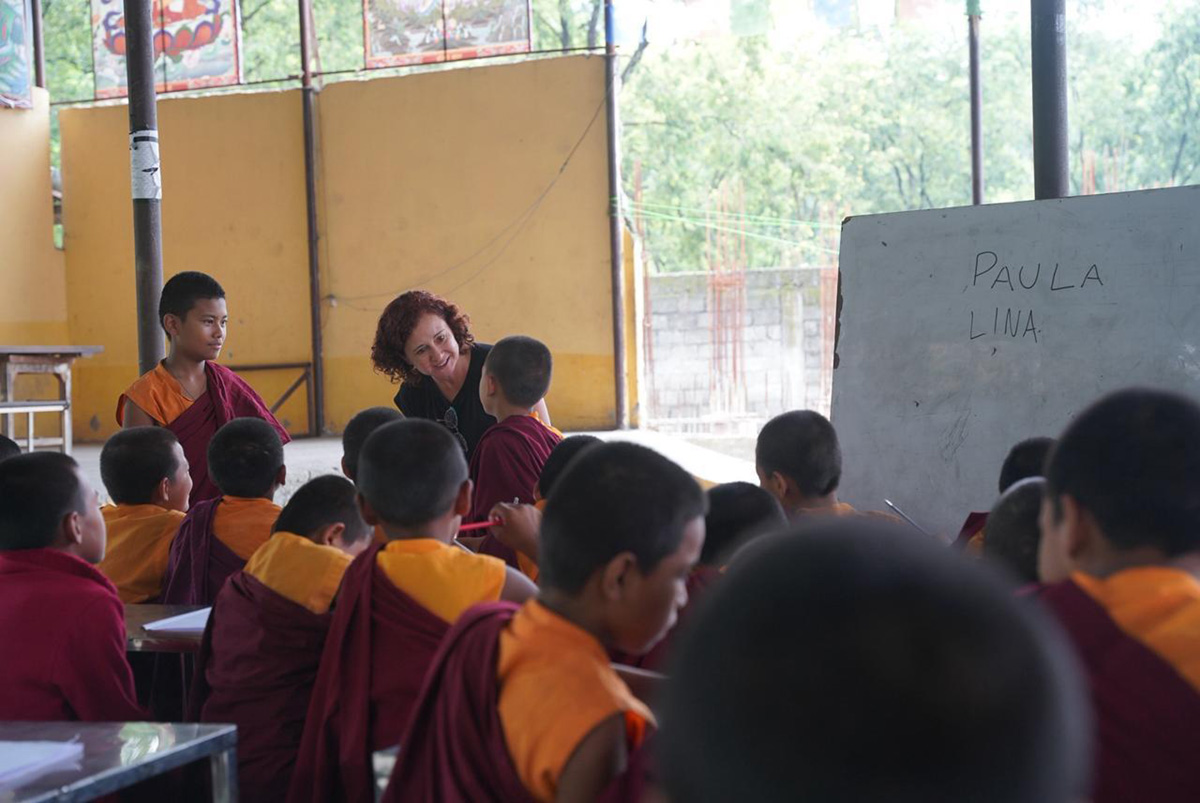
- Teach English or assist young monks with learning and communication.
- Cultural Learning
- Understand Buddhist traditions, values, and everyday monastic life.
- Community Participation
- Help during temple activities, ceremonies, or local events.
How Long Can You Stay?
Depending on the program, stays may range from:
- A few days
- One or two weeks
- One month
- Several months
Whatever the duration, the most important things to bring are respect, patience, and willingness to learn.
Buddhist Monasteries for Travelers
Travelers can find Buddhist monastery experiences across several Asian destinations, although the type of stay varies from place to place.
Popular Destinations
- Nepal
- Tibetan Buddhist monasteries
- Volunteer opportunities
- Meditation and Himalayan monastery experiences
- India
- Buddhist communities and monasteries
- Retreats and spiritual learning
- Sri Lanka
- Theravada Buddhist traditions
- Temple stays and volunteer opportunities
- Thailand
- Meditation retreats
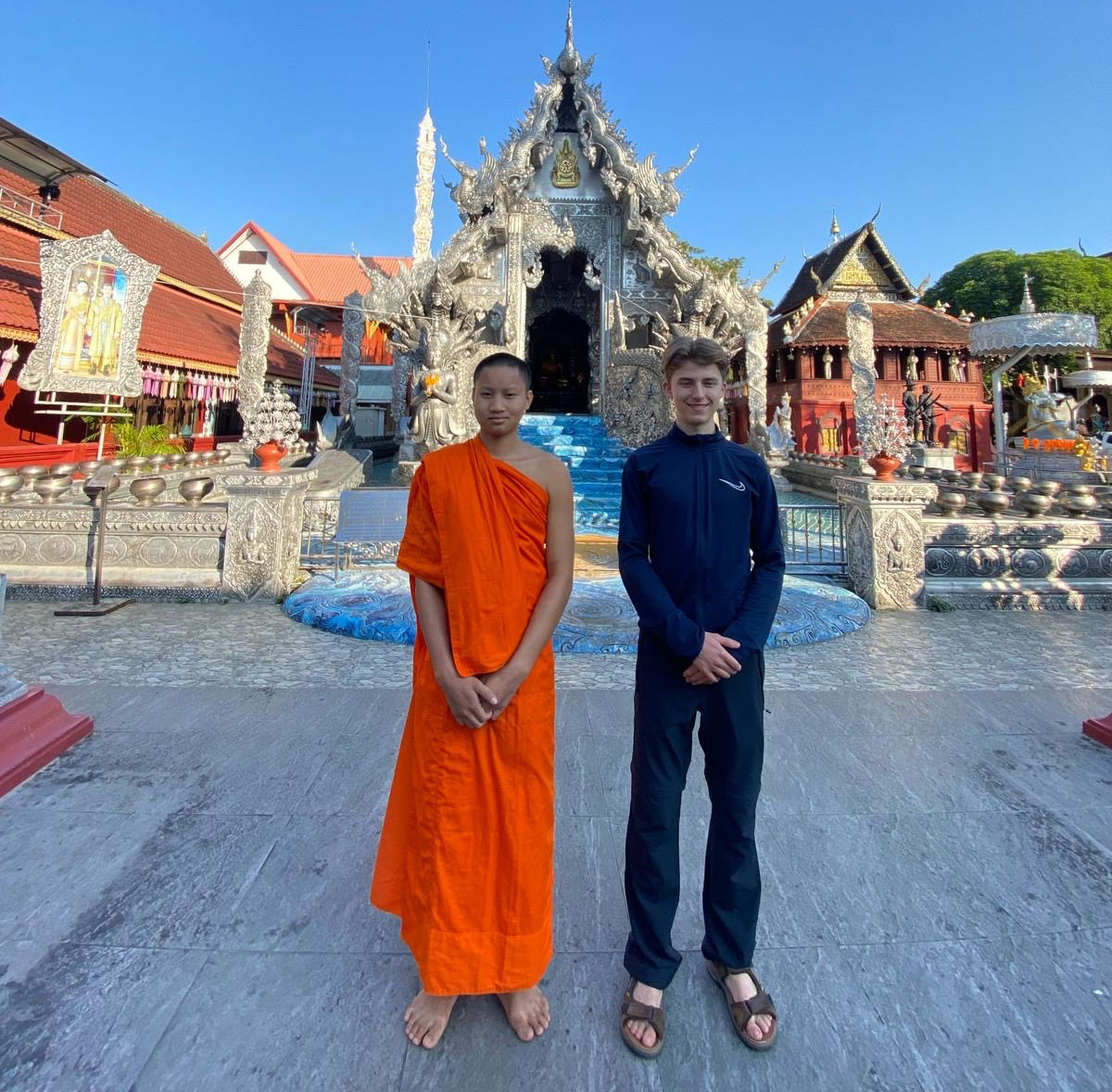
- Temple and monastery experiences
Different Ways Travelers Can Stay
Some monasteries may offer:
- Meditation retreats
- Volunteer placements
- Guest accommodation
- Cultural learning programs
- Short-term spiritual stays
Respect the Purpose of the Place
A monastery should not be treated simply as inexpensive accommodation.
Travelers should be prepared to:
- Follow monastery rules.
- Dress and behave respectfully.
- Respect sacred spaces.
- Participate appropriately in the daily routine.
- Understand that spiritual practice comes before tourism.
Approaching the experience with the right attitude can make a monastery stay far more meaningful than simply finding a cheap place to sleep.
Free and Affordable Buddhist Monastery Stays
A monastery stay does not always require a large travel budget. Depending on the monastery, you may find free, donation-based, work-exchange, or low-cost options, each with different responsibilities and expectations.
Live in a Buddhist Monastery Free
Many people search for how to live in a Buddhist monastery free. In some cases, monasteries may provide free accommodation in exchange for volunteer work or service.
However, free stay is not guaranteed everywhere. Even if the stay is free, you should still contribute through your time, respect, and helping hands.
Can I Live in a Buddhist Monastery for Free
You may be able to live in a Buddhist monastery for free if the monastery needs volunteers and has space available. But many monasteries may still ask for a small donation to cover food and basic facilities.
It is better to ask clearly before joining. This helps avoid confusion and shows respect toward the monastery community.
Please click here to get the complete details on available programs, volunteer’s roles and activities , accommodation, cost, visa , vaccination, airport arrival and the rest of it.
Get More Info Now »
Donation-Based and Work-Exchange Monastery Stays
Some monasteries offer donation-based stays or allow visitors to exchange volunteer service for basic accommodation. Others may charge a fixed amount for meals, lodging, or program support.
Even when there is little or no accommodation cost, the stay should be approached as an exchange of service and learning rather than simply as free lodging.
Volunteer and Live in a Monastery Free
To volunteer and live in a monastery free, you need to offer your skills and time. You can teach English, help young monks, assist in daily works, or support temple events.
This type of experience can be meaningful because both sides benefit. You help the monastery, and in return you learn about Buddhist culture and simple living.
Affordable Buddhist Monastery Stays
Affordable Buddhist monastery stays are more common than free stays. Many programs charge a small fee for accommodation, meals, coordination, and local support.
This can be a good option for travelers who want a meaningful experience without spending too much money. You get basic living, cultural immersion, and a peaceful environment.
Affordable Monastery Living for 3 Months
Affordable monastery living for 3 months can be suitable for people who want a deeper experience. A short stay gives you a glimpse, but three months gives you time to understand the routine and culture properly.
During this time, you may teach English, help with daily activities, join meditation, and build a closer connection with the monks and community.
Live in Buddhist Monastery for 3 Months in Nepal
To live in Buddhist monastery for 3 months in Nepal can be a very special experience. Nepal is the birthplace of Lord Buddha and has many Buddhist monasteries, especially in Kathmandu, Pokhara, and Himalayan regions.
You may stay with monks, teach English, join prayers, and learn about Buddhist traditions. The peaceful hills and Himalayan environment also make the experience more meaningful.
Join a Monastery for a Year
To join a monastery for a year is a serious decision. It requires patience, discipline, and a strong willingness to live a simple life.
A one-year monastery stay may be possible in some places through study, volunteering, or spiritual practice. Before joining, you should understand the rules, responsibilities, visa conditions, and personal commitment required.
Living with Monks and Learning Their Lifestyle
Staying close to monks gives you a chance to understand monastic life beyond what a short visit can show. Through shared routines, service, prayer, and conversation, you can see how discipline and compassion are practiced every day.
Live with Monks
To live with monks is to experience their daily life from close distance. You may see how they wake up early, pray, meditate, study, and complete their daily responsibilities.
This experience teaches you discipline, silence, kindness, and the value of simple living. You also get the chance to share your knowledge with them.
Live with Monks for a Month
Living with monks for a month allows you to understand their lifestyle better than a short visit. You slowly get used to their routine, food, prayer time, and quiet environment.
A month can be enough time to build a connection with the community and also reflect on your own life.
Lessons You Can Learn from Living with Monks
Living with monks gives you the chance to learn by observing how they respond to ordinary situations with patience, discipline, and awareness. The learning often comes from small daily habits rather than formal lessons.
By sharing the same environment and respecting their routine, you may take home practical ideas about compassion, simplicity, and mindful living.
What a One-Month Stay with Monks Can Offer
A month with monks gives you enough time to move beyond first impressions and become familiar with the monastery's rhythm. You can combine service with meditation, cultural learning, and personal reflection.
This length of stay can suit volunteers, students, travelers, or anyone who wants a meaningful break from a busy routine without making a long-term commitment.
Live with Monks for a Week
To live with monks for a week can be a good beginning for first-time travelers. It gives you a short but meaningful experience of monastery life.
In one week, you may join prayers, meditate, help in small works, and understand the basic lifestyle of monks. It can also help you decide if you want a longer stay later.
| Living | Details |
|---|---|
| Live with Buddhist Monks | Learn patience, inner peace, and Buddhist values through their daily routine. You may also contribute by teaching English or supporting communication. |
| Live with Tibetan Monks | Experience Tibetan Buddhist traditions such as chanting, meditation, debates, rituals, and Buddhist study while learning about their spiritual lifestyle. |
| How to Live with Monks | Be humble, respectful, and ready to follow the monastery routine. Dress modestly, follow timings, communicate politely, and help where needed. |
Experience a Monk-Like Routine Without Ordination
You can experience aspects of a monk-like routine without formally becoming a monk. This may include waking early, eating simple food, meditating, reducing distractions, and following the monastery's daily discipline.
Such a stay can help you understand simplicity and self-control in practice while still remaining a visitor, volunteer, or retreat participant.
Become a Buddhist Monk for a Month
Some people want to become a Buddhist monk for a month to experience monastic life more deeply. This depends on the monastery and whether they allow short-term ordination or temporary monk programs.
Before joining, you should understand the seriousness of the process. Becoming a monk, even for a short time, is not only a travel activity but a spiritual commitment.
How to Join a Buddhist Monastery or Temple
Joining a Buddhist monastery can mean volunteering, attending a retreat, studying Buddhism, or staying as a visitor; it does not always mean becoming a monk or nun. The process usually begins by choosing your purpose and checking the monastery's rules.
How to Join Buddhist Monastery
To join Buddhist monastery, you first need to decide your purpose. You may want to join for volunteering, meditation, cultural learning, or long-term Buddhist study.
After that, you can contact a monastery or a volunteer organization. You should explain your interest, available time, skills, and willingness to follow monastery rules.
Steps to Apply for a Buddhist Monastery Stay
Start by contacting the monastery directly or applying through a volunteer or retreat program. Explain why you want to stay, how long you are available, and whether you hope to volunteer, meditate, study, or simply learn.
Before confirming, ask about accommodation, meals, fees or donations, daily schedules, rules, and responsibilities so you can arrive properly prepared.
What to Expect After Joining a Buddhist Monastery
Once you join a Buddhist monastery, your days may follow a quiet and structured routine shaped by prayer, meditation, study, and service. The environment will usually be very different from a normal tourist stay.
You may need to follow quiet hours, attend certain activities, help with daily tasks, and accept basic facilities as part of participating respectfully in monastery life.
Short-Term and Long-Term Ways to Join a Monastery
Monastery experiences can range from a few days to several months or longer. Short stays may focus on retreats or cultural learning, while longer stays may involve volunteering, study, or deeper participation in daily routines.
Please click here to get the complete details on available programs, volunteer’s roles and activities , accommodation, cost, visa , vaccination, airport arrival and the rest of it.
Get More Info Now »
Whatever the duration, you should choose an option that matches your purpose and be prepared to follow the same expectations of respect, discipline, and simplicity.
How Can I Join a Buddhist Monastery
You can join a Buddhist monastery by finding the right program and contacting them in advance. You should clearly mention your purpose and how you can help.
If you want to volunteer, mention your skills like teaching English, organizing activities, writing, gardening, or helping in daily chores.
Who Can Join a Buddhist Monastery?
Many monasteries accept foreign visitors, volunteers, retreat participants, or students, but policies vary widely. Your purpose, length of stay, background, and willingness to follow the rules may all affect whether you are accepted.
Approach the monastery with humility, communicate clearly, and avoid assuming that every monastery offers residential stays. Respectful preparation can make the process easier.
Finding the Right Monastery to Join
Look for Buddhist monasteries, retreat centers, volunteer placements, or temples that offer the type of experience you want. Compare the purpose of each program rather than choosing only by location or price.
Check the daily schedule, accommodation, food, dress expectations, costs or donations, and visitor rules before applying so you can choose a monastery that fits you well.
| How to Join | Overview |
|---|---|
| How to Join Monastery | Choose whether you want to join as a volunteer, meditator, traveler, or spiritual learner. Volunteers may apply through an organization, while retreat participants often register directly with the monastery or meditation center. |
| How to Join a Buddhist Temple | Contact the temple directly and explain your availability and skills. You may be able to help with teaching, cleaning, events, or community service. |
| How to Join a Monastery as a Female | Women can look for nunneries, female retreat centers, or monasteries that accept women volunteers. Check accommodation, safety, dress code, and separate facilities before arrival. |
| Joining a Monastery as Volunteer | Volunteering is a practical way to experience monastery life without becoming a monk or nun. You may help with teaching, cooking, gardening, cleaning, events, or children’s education while learning about Buddhist culture and meditation. |
Buddhist Monastery Volunteer Programs
Volunteer programs offer a practical way to support monasteries while learning about Buddhist life. Depending on the placement, you may help with education, community work, daily chores, or temple activities while staying in or near the monastery.
Volunteer in Buddhist Monastery
To volunteer in Buddhist monastery, you should have a helping attitude and willingness to live simply. Your work may include teaching English, helping young monks, supporting daily chores, or assisting in temple activities.
This is not only about giving help. It is also about learning from monks, understanding their culture, and experiencing peace through service.
What a Buddhist Monastery Volunteer Experience Involves
A Buddhist monastery volunteer experience combines purposeful travel with practical service. You may live in a peaceful setting while contributing your time to education, daily activities, or community support.
Tasks can change according to the monastery's needs, so flexibility matters. Being willing to help with both simple and unexpected work is often part of the experience.
Typical Roles for Buddhist Monastery Volunteers
Volunteer roles can include teaching English, helping with cleaning or cooking, assisting with events, supporting children or young monks, and helping with communication or basic administration.
Alongside these responsibilities, you may also have opportunities to join meditation, observe Buddhist traditions, and learn how discipline and compassion shape monastic life.
Volunteer at Buddhist Monastery
When you volunteer at Buddhist monastery, you should be ready for a simple schedule and modest lifestyle. The work can be small, but it can still be meaningful.
Even helping with daily chores or teaching basic English can support the monks and nuns. Your presence can make a difference if you work with sincerity.
Skills You Need to Volunteer at a Monastery
Most monastery volunteer roles do not require professional qualifications. A respectful attitude, reliability, patience, basic communication skills, and a genuine willingness to help are often more important.
For teaching or education-related placements, stronger spoken and written English can be useful, while other practical skills may help depending on the monastery's needs.
How Monastery Volunteer Programs Work
Monastery volunteer programs usually connect travelers with monasteries that need practical support. Depending on the program, they may organize placement, orientation, accommodation, meals, and local assistance.
Programs can last from a few weeks to several months, giving you a structured way to serve while learning about the local Buddhist community and its daily life.
Buddhist Temple Volunteer
A Buddhist temple volunteer may help in temple cleaning, event preparation, teaching, charity activities, or visitor support. Temples are often connected with local communities, so your work may also support local people.
This can be a good option if you want to volunteer but cannot stay inside a monastery for a long period.
Tibetan Monastery Volunteering Program
A Tibetan monastery volunteering program can give you the chance to work with Tibetan monks and communities. You may help in English teaching, educational support, or daily monastery activities.
You will also learn about Tibetan Buddhist culture, chanting, meditation, and the monastic way of life.
Volunteering and Living in Monastery Thailand
Volunteering and living in monastery Thailand can be a peaceful and cultural experience. Thailand has a strong Buddhist tradition and many temples and monasteries across the country.
You may help with English learning, temple activities, meditation programs, or community support. The experience can help you understand Thai Buddhist culture more closely.
Buddhist Retreat, Meditation, and Spiritual Practice
For travelers seeking more time for reflection, monasteries can also offer retreats and meditation-focused stays. These experiences usually place less emphasis on sightseeing and more on silence, mindfulness, spiritual practice, and a simple daily routine.
Please click here to get the complete details on available programs, volunteer’s roles and activities , accommodation, cost, visa , vaccination, airport arrival and the rest of it.
Get More Info Now »
Buddhist Monastery Retreat
A Buddhist monastery retreat gives you time to slow down and focus on meditation, silence, and self-reflection. It is different from normal travel because the main purpose is inner learning.
During the retreat, you may follow a fixed schedule of meditation, prayer, teachings, and simple living. This can help you reduce stress and understand your mind better.
Monk Retreat for Meditation
A monk retreat for meditation can allow you to learn meditation from monks who practice it daily. You may sit with them, listen to their guidance, and slowly develop your own practice.
This experience can be simple but powerful. It helps you understand meditation not as a trend, but as a daily discipline.
Meditation with Tibetan Monks
Meditation with Tibetan monks can be a special experience for those interested in Tibetan Buddhism. You may experience chanting, silent sitting, compassion meditation, and spiritual discussion.
Tibetan monks often follow deep practices that are connected with wisdom, compassion, and mind training. Observing and joining them can be a valuable learning experience.
Buddhist Ashram Stay
A Buddhist ashram stay can be similar to a monastery or retreat experience, depending on the place. You may live simply, meditate, help in daily work, and learn spiritual values.
Before joining, you should check whether the place follows Buddhist practice and what type of stay they offer. Some places are more retreat-focused, while others are community-based.
Himalayan Monastery Stay
A Himalayan monastery stay can be peaceful because many monasteries are located in hills, valleys, and quiet mountain areas. The natural environment itself adds to the feeling of silence and reflection.
In the Himalayas, you may stay near Tibetan Buddhist communities, join meditation, help monks, and experience a simple mountain lifestyle.
Stay in a Tibetan Monastery
To stay in a Tibetan monastery, you should first find out whether the monastery accepts visitors or volunteers. Tibetan monasteries can have strict traditions and daily schedules.
If accepted, you may observe chanting, debates, prayers, and meditation practices. You should be respectful and follow the instructions given by the monastery.
Buddhist Monastery Stay in Nepal, India, Sri Lanka, and Thailand
The experience of staying in a Buddhist monastery varies by country, tradition, and local customs. Nepal, India, Sri Lanka, and Thailand each offer different combinations of retreats, volunteer opportunities, temple stays, and cultural learning.
How to Join Buddhist Monastery in Sri Lanka
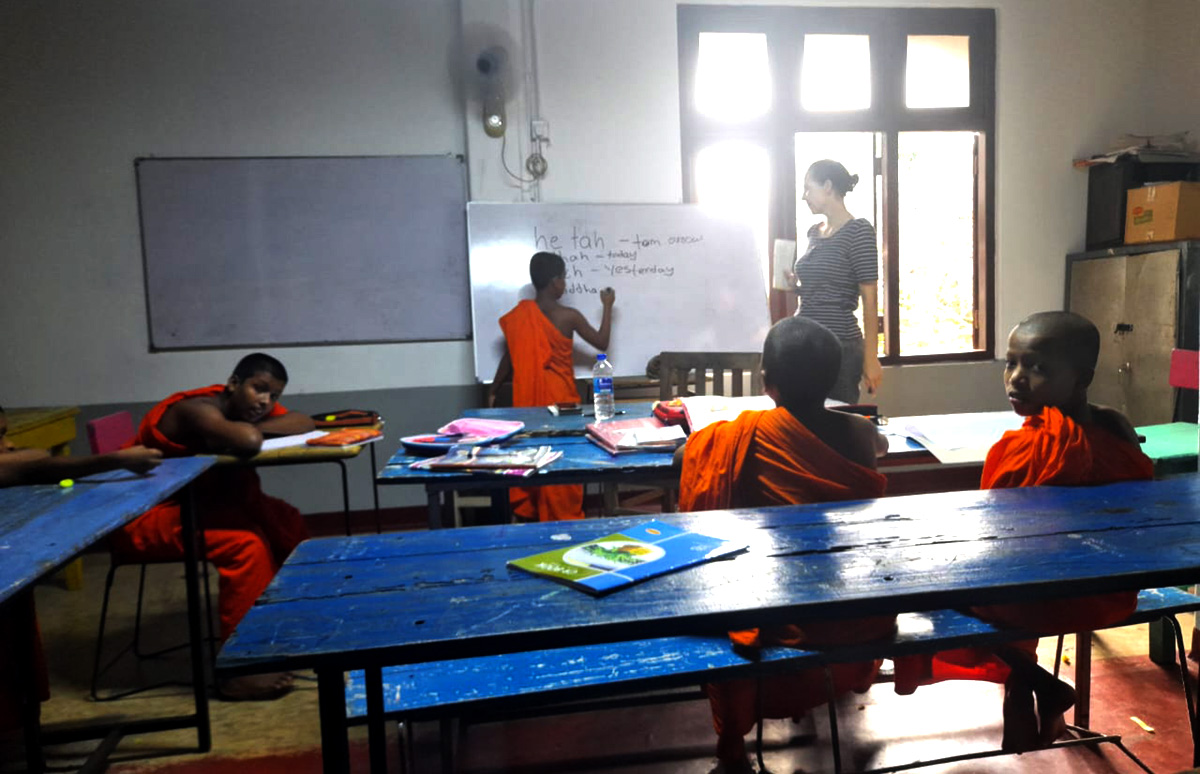
To join Buddhist monastery in Sri Lanka, you can look for monastery volunteer programs, meditation retreats, or Pirivena teaching opportunities. Sri Lanka has many Buddhist monasteries and a strong monastic education tradition.
You may teach English, assist young monks, or join temple activities. It is better to apply through a trusted organization or contact the monastery directly.
Free Monastery Stays Sri Lanka
Free monastery stays Sri Lanka may be available in some places, especially if you are volunteering or offering help. But it is not something you should expect everywhere.
Many monasteries may ask for a donation or small fee for food and accommodation. You should ask clearly before joining and be ready to contribute.
Monastery Stay Sri Lanka
A Buddhist monastery stay Sri Lanka can help you understand Buddhist culture in one of the most important Buddhist countries. You may live near monks, join prayers, and help in educational or temple activities.
This experience can be useful for travelers who want cultural learning, meditation, and volunteering in a peaceful environment.
Can You Stay in a Buddhist Monastery in India
Yes, you can stay in a Buddhist monastery in India in some places, especially in regions like Ladakh, Himachal Pradesh, Sikkim, and Bodh Gaya. Some monasteries offer retreats, guest stays, or volunteer opportunities.
You should always check the rules before going. Some monasteries are open to visitors, while others may have limited access.
Buddhist Monastery in Thailand
A Buddhist monastery in Thailand can offer a deep experience of Theravada Buddhist culture. Thailand has many temples and monasteries where monks follow daily prayer, study, and meditation.
Travelers may join retreats, volunteer programs, or temple stays depending on the monastery. Respect for local customs is very important.
How to Join Monastery in Chiang Mai
Chiang Mai is one of the popular places in Thailand for Buddhist retreats and monastery experiences. To join monastery in Chiang Mai, you can search for meditation centers, temples, or volunteer programs.
Before joining, ask about the daily schedule, accommodation, donation, dress code, and whether foreigners are accepted. This will help you prepare for the stay.
How to Join Buddhist Monastery in Kathmandu
To join a Buddhist monastery in Kathmandu, Nepal, you can look around areas where many monasteries are located, including Boudha and other Buddhist communities. Kathmandu has many monasteries connected with Tibetan Buddhism and local Buddhist traditions.
You may join through a volunteer program, meditation center, or direct monastery contact. Teaching English to young monks can also be one possible way to contribute.
Buddhist Monastery in Pokhara
A Buddhist monastery in Pokhara can give you a peaceful stay with views of hills and mountains. Pokhara is also known for its calm environment, which can be suitable for meditation and reflection.
Some monasteries may allow visitors, retreats, or volunteering. It is better to contact the monastery or local organization before planning the stay.
Monasteries in Nepal Where You Can Stay
There are monasteries in Nepal where you can stay, especially through volunteer programs or retreat arrangements. Kathmandu, Pokhara, and Himalayan regions are some places where travelers look for monastery experiences.
Nepal can be a meaningful destination because it is connected with Lord Buddha and has both Nepali and Tibetan Buddhist communities.
How to Join a Tibetan Monastery
To join a Tibetan monastery, you should first understand that Tibetan monasteries have specific traditions and rules. You may join as a visitor, retreat participant, student, or volunteer if the monastery allows it.
You should contact the monastery in advance and explain your intention. Respect, patience, and discipline are important when entering Tibetan monastic life.
How to Become a Buddhist Monk in Himalayas
To become a Buddhist monk in Himalayas is a serious spiritual path. It is not only about wearing robes or staying in a monastery, but about committing to Buddhist discipline and practice.
If you want to explore this path, you should first spend time in a monastery, learn from monks, and understand the responsibilities. Long-term commitment should be made only after proper guidance.
Frequently Asked Questions (FAQs)
Can You Stay in a Buddhist Monastery?
Yes, you can stay in a Buddhist monastery in countries like Nepal, Sri Lanka, India, and Thailand. Depending on the monastery, you may join meditation retreats, volunteer programs, or cultural learning experiences.
How Long Can You Stay at a Buddhist Monastery?
A stay at a Buddhist monastery can range from a few days to several weeks or months. During your stay, you can learn Buddhist teachings, join prayers, help with monastery work, and experience a peaceful lifestyle.
Is a Buddhist Monastery Free to Stay In?
A Buddhist monastery free stay may be available through certain volunteer arrangements. In exchange for basic accommodation, you may help with teaching, cleaning, gardening, cooking, or temple activities.
Can I Live with Monks for a Month?
Yes, you can live with monks for a month if the monastery accepts short-term residents or volunteers. You should be prepared to follow monastery rules and respect its traditions, routines, and peaceful environment.
How Can I Join Buddhist Monastery Life?
You can join Buddhist monastery life without becoming a monk by volunteering, attending a retreat, visiting, or studying Buddhist values. A respectful attitude, patience, and willingness to learn are essential.
Can I Join a Buddhist Monastery as a Volunteer?
Yes, you can join a Buddhist monastery as a volunteer if it accepts visitors, volunteers, or retreat participants. You may help with daily activities, learn meditation, or explore Buddhist culture while following the monastery's rules.
What Buddhist Volunteer Opportunities Are Available?
Buddhist volunteer opportunities are available in monasteries, temples, meditation centers, and schools for monks. Activities may include teaching, temple support, cultural exchange, childcare, and meditation learning.
What Is a Buddhist Retreat Like?
A Buddhist retreat may last from a few days to several weeks and commonly includes meditation, silence, Buddhist teachings, and mindful living. It can be a meaningful way to find greater peace, focus, and clarity.
Conclusion: Staying, Volunteering, and Living in a Buddhist Monastery in 2026
A Buddhist monastery stay in 2026 can be one of the most peaceful and meaningful ways to travel abroad. You can live with monks, volunteer in monastery activities, teach English, join meditation, and learn about Buddhist culture from close distance.
Whether you are looking for affordable Buddhist monastery stays, free monastery stays, monastery volunteer programs, or a retreat for meditation, you should join with respect and the right intention. Living in a monastery is not just about accommodation. It is about service, discipline, learning, and compassion.
If you are ready to live simply, help where needed, and open yourself to a different way of life, then volunteering and living in a Buddhist monastery can become a lifetime experience.Published on August 12, 2026
To share this link:
Please click here to get the complete details on available programs, volunteer’s roles and activities , accommodation, cost, visa , vaccination, airport arrival and the rest of it.
Get More Info Now »