

How to Help the Nepal Rasuwa Flood Victims and Survivors in 2026
Last Updated: August 27, 2026
Tweet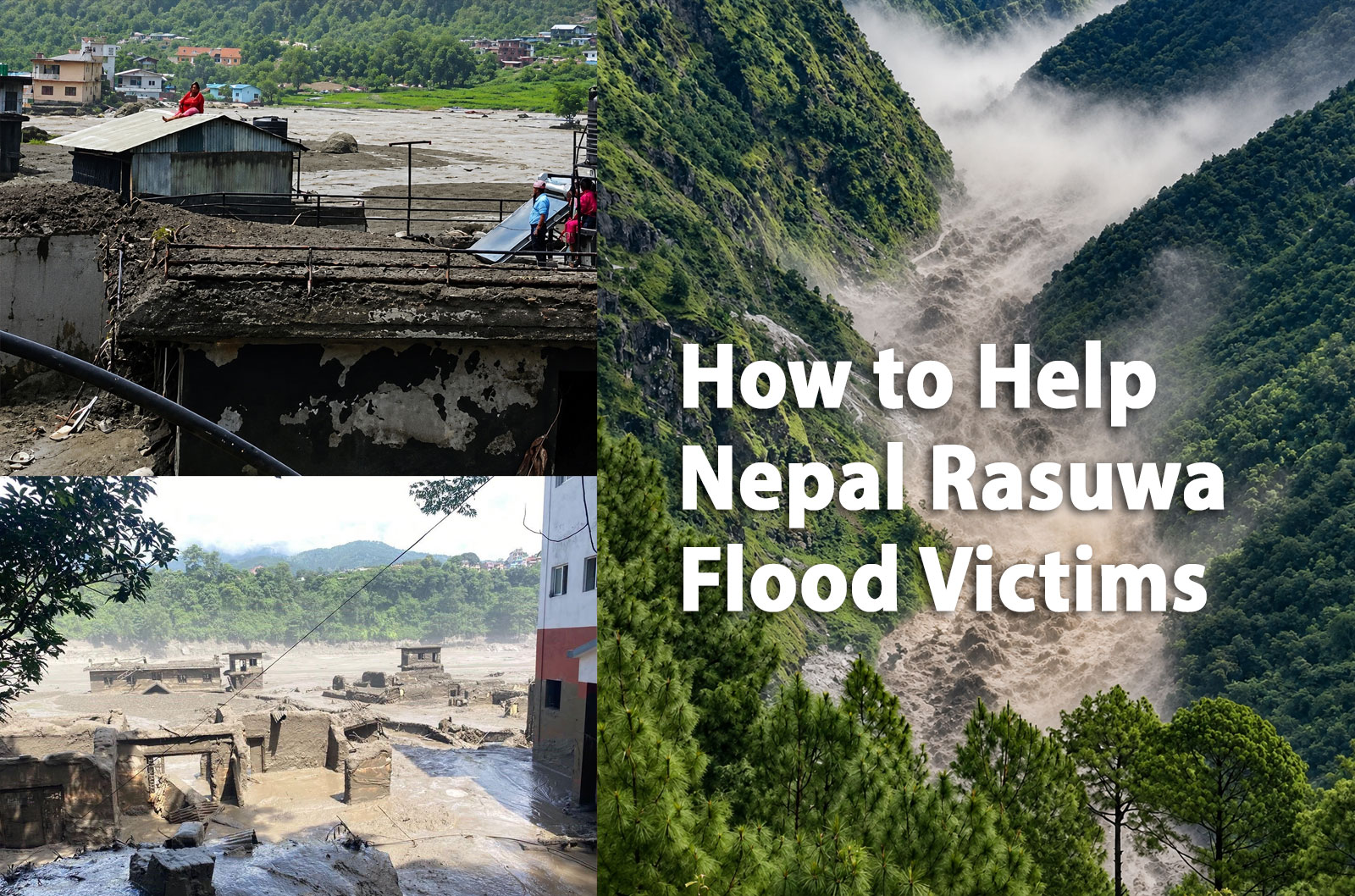
A massive flash flood struck Nepal's Rasuwa district on August 26, 2026, bringing destruction to settlements, market areas, roads, bridges and hydropower infrastructure along the Bhotekoshi and Trishuli river corridor. Timure and Syaphrubesi were among the areas badly affected, while communities downstream in Nuwakot, Dhading and other districts were also placed on high alert. The flood entered Nepal from the Tibet side, and the exact cause was still being investigated during the initial rescue operation.
For people watching the disaster from Kathmandu, other parts of Nepal or from abroad, the first question naturally becomes: How can we help the Rasuwa flood victims and survivors? Rescue teams are still working in difficult conditions, but ordinary people can also contribute through blood donation, financial support, verified humanitarian organizations and, in the case of trained professionals, coordinated volunteer rescue work.
The courage, promptness, and sensitivity demonstrated by the Government of Nepal and Prime Minister Balen Shah are truly commendable. To support the government’s relief efforts, you can contribute to the Prime Minister’s Relief Fund through their following website: Prime Minister's Relief Fund Appeal for Rasuwa Flood >>
How is the Situation Now?
The situation remains serious. The flood has caused extensive destruction in places including Timure, Syaphrubesi and settlements along the Bhotekoshi-Trishuli corridor. Roads and bridges have been washed away, communication with some communities has been disrupted, and many people have been reported missing or out of contact. Later reports put the confirmed death toll at at least 162 and hundreds missing, although casualty figures may continue to change as search and rescue operations reach previously inaccessible areas.
The Nepali Army, Armed Police Force and Nepal Police have been mobilized for rescue operations. The Nepali Army reported rescuing at least 25 people from areas including Timure, Syafru and Trishuli, while 14 helicopters, six Nepali Army helicopters and eight private helicopters, were deployed for search, rescue and relief. Medical teams have also been mobilized, and authorities have been relocating people living in vulnerable areas along the river to safer locations.
Who is Helping?
Nepal Red Cross Society
Nepal Red Cross Society’s Emergency Response Committee meeting was held to discuss the response to flood in Rasuwa with the representatives from the International Federation of Red Cross and Red Crescent Societies (IFRC) and Partner National Societies. pic.twitter.com/BH590HXYGy
— Nepal Red Cross Society (@NepalRedCross) August 26, 2026
The Nepal Red Cross Society (NRCS) is supporting the emergency response and coordinating with government health authorities and medical facilities. According to the information provided during the disaster, the Red Cross was prepared to manage blood and other medical supplies required for injured flood victims and was coordinating with hospitals and blood transfusion centers. The organization has also encouraged people to continue regular blood donations because demand can increase quickly during major disasters. The Nepal Red Cross operates blood transfusion services as part of its wider humanitarian and disaster-response work, and it has also been included in the government's coordinated emergency response to the Rasuwa floods.
WHO
The World Health Organization (WHO) is providing important medical assistance. According to Nepal's Ministry of Health, WHO is preparing basic medicines and medical equipment sufficient for approximately 1,000 people, together with 15 emergency tents measuring 24 square metres each. One hundred emergency beds have also been allocated at Bir Hospital and the Trauma Centre in Kathmandu for flood victims. Health authorities are coordinating with hospitals, blood transfusion services, the health ministries of Bagmati and Gandaki provinces, the Nepal Red Cross Society, Lions Clubs and Nepal Scouts.
Local Government
Local, provincial and federal authorities are working together in the affected districts. Prime Minister Balendra “Balen” Shah directed the mobilization of security forces, medical teams, Nepal Scouts, the Nepal Red Cross Society and additional ambulances while ordering authorities to relocate people living in vulnerable downstream settlements. The government has also announced immediate emergency funding through District Disaster Management Funds, including Rs 10 million each for Rasuwa and Nuwakot and Rs 5 million for Dhading. The Bagmati Province government has directed authorities to prioritize rescue, medical treatment, food, shelter and clean drinking water for displaced families.
How Can You Help the People Affected by the Flood?
There are several ways to help, but assistance should be provided through organized and verified channels rather than travelling independently into the disaster zone.
Donate through the Nepal Red Cross Society. The Nepal Red Cross has an official online donation system where people in Nepal and abroad can contribute. Donating money through established organizations can often be more useful than independently sending goods because relief agencies can purchase exactly what affected families need and transport it through coordinated channels.
Donate blood if you are eligible. Blood requirements can rise suddenly when large numbers of injured people need emergency treatment. The Nepal Red Cross Society operates blood transfusion services across Nepal and encourages regular voluntary blood donation. Donating before stocks become critically low can help hospitals remain prepared throughout the emergency.
Volunteer only through authorized organizations. The Nepal Mountaineering Association (NMA) has appealed to trained mountaineers, rafting guides, canyoneers, rescue technicians and other adventure professionals with skills in high-altitude rescue, swift-water rescue, rope rescue, river crossing, first aid and emergency medical assistance to register for possible deployment. Importantly, the NMA has warned volunteers not to enter flood-affected areas independently. Rescue work should be conducted only in coordination with government agencies, security forces and official emergency teams.
Support verified relief campaigns. Families affected by the flood may need food, clean drinking water, temporary shelter, clothing, medicines and basic household necessities for weeks or months. Before donating money or goods to an online campaign, verify the organization, bank account and person collecting the funds. During large disasters, misinformation and unverified fundraising campaigns can spread quickly.
Share useful information rather than rumours. People living along the Bhotekoshi and Trishuli river systems have been repeatedly advised to follow government warnings and move away from dangerous riverbanks when instructed. Sharing official rescue numbers, evacuation notices and verified updates can itself become a useful form of assistance. Authorities have specifically asked the public to rely on official information rather than rumours.
If you have relatives, friends or contacts in the affected region, avoid encouraging them to travel through damaged roads or cross rivers unnecessarily. Roads, bridges and communication networks have been badly affected, and some locations may remain dangerous even after the water level begins to decrease.
Conclusion
The 2026 Rasuwa flood is another reminder of how vulnerable Himalayan communities can be to sudden floods, glacial hazards and disasters that travel rapidly through interconnected mountain river systems. For families in Timure, Syaphrubesi and communities further downstream, the disaster is not only about damaged roads and buildings. Some have lost homes, livelihoods and family members, while others are still waiting for information about missing relatives.
Helping does not always mean going physically to Rasuwa. Donating blood, contributing through the Nepal Red Cross Society or other verified relief channels, sharing reliable emergency information and supporting professional rescue organizations can all make a difference. Those with specialized rescue skills can contribute even more, but only through official coordination. In a disaster of this scale, organized help is safer and often far more useful than uncoordinated help.
The courage, promptness, and sensitivity demonstrated by the Government of Nepal and Prime Minister Balen Shah are truly commendable. To support the government’s relief efforts, you can contribute to the Prime Minister’s Relief Fund through their following website: Prime Minister's Relief Fund Appeal for Rasuwa Flood >>
Disclaimer: This post doesn’t offer any program of Volunteer FDIP. We are sharing this solely as a purpose of conveying this helpful information to the people who want to support Nepal Rasuwa Victims and Survivors.
We hope you found our information helpful. Please share it with your friends and families:
Please click here to get the complete details on available programs, volunteer’s roles and activities , accommodation, cost, visa , vaccination, airport arrival and the rest of it.
Get More Info Now »