

How to Volunteer and Live in a Buddhist Monastery in Nepal: A 7-Day Kathmandu Guide
Last Updated: August 23, 2026
Tweet
We have been providing you many helpful stories about Buddhism, Buddhist journeys and humanitarian trips. Today, you will explore ins and outs of volunteering and living in a Buddhist monastery in Kathmandu, Nepal for a week.
The very essence of Kathmandu has the spiritual feel of Buddhism. From majestic Bouddhanath stupa at city's heart to Swayambhunath on a beautiful hill of Kathmandu. From reminiscence of buddhism in historic Durbar Squares to different temples and monasteries around the hill tops of the valley. Kathmandu is ultimate destination for all Buddhism enthusiasts.
The journey is quite simple. You arrive in Kathmandu, understand the volunteer program and the city first, and then move into the monastery where you meet the monks and children, join morning prayers and participate in volunteer activities. The suggested seven-day program costs around USD 220.
You don't need to know everything about Buddhism before coming. You don't even need to be a regular meditator. What matters more is that you are willing to live differently for a few days, respect the monastery and become part of its routine.
Please click here to get the complete details on available programs, volunteer’s roles and activities , accommodation, cost, visa , vaccination, airport arrival and the rest of it.
Get More Info Now »
Quick Trip Summary
Here is what the 7-day Buddhist monastery volunteer experience in Kathmandu looks like at a glance:
- Duration: 7 days
- Destination: Kathmandu, Nepal
- Experience: Buddhist monastery living and volunteering
- Arrival: Tribhuvan International Airport
- First 2 Days: Arrival, orientation and introduction to Kathmandu
- Monastery Stay Begins: Day 3
- Days 4–7: Morning prayers, volunteering and interaction with monks and children
- Approximate Program Cost: USD 220
- Suitable For: Solo travelers, spiritual travelers, volunteers, meditation enthusiasts and people interested in Buddhism
- Main Experience: Living inside a monastery rather than simply visiting one
The seven days gradually move you from regular Kathmandu life into monastery life instead of putting you directly into an unfamiliar environment on the first day.
Practical Logistics: What to Know Before You Volunteer in a Buddhist Monastery
How to Join a Buddhist Monastery Volunteer Program
Living in a monastery is different from simply booking accommodation in Kathmandu.
You should join through an organized program or make arrangements with a monastery that actually accepts volunteers.
Before confirming anything, understand exactly what you are joining.
Ask what your volunteer responsibilities will be, where you will sleep, what meals are provided, whether airport pickup is included and how much interaction you will actually have with monks and children.
This is important because the purpose should not simply be finding a cheap place to stay.
You are entering somebody else's religious and living environment.
Do You Need to Be Buddhist?
No.
You don't need to become Buddhist to volunteer in a Buddhist monastery in Nepal.
You are there to learn, observe, volunteer and experience.
There may be prayers and Buddhist rituals taking place around you. You may not understand the language or meaning of everything during the first few days.
That is completely normal.
Instead of trying to understand everything immediately, sometimes it is better to sit quietly and observe.
I think this is one of the most interesting things about monastery life. In our normal travels, we are constantly trying to see, photograph and understand everything.
Inside a monastery, sometimes doing less allows you to experience more.
Nepal Visa and Passport
The travel information provided for this guide states that U.S. and EU travelers require a valid passport and visa to enter Nepal. A passport should generally have at least six months of validity remaining.
A Nepal visa can be arranged before departure or, depending on your nationality and circumstances, upon arrival at Tribhuvan International Airport.
Visa-on-arrival processing can involve queues, particularly when several international flights arrive around the same time.
Since visa rules can change, check Nepal's latest official immigration requirements before traveling rather than relying only on older travel blogs.
Airport Pickup and Arrival
Your first day starts at Tribhuvan International Airport, where the local coordinator can pick you up and take you to your accommodation.
The remainder of the day is kept free for rest.
I actually like this arrangement.
After a long international flight, immediately putting yourself into monastery activities can be tiring.
Kathmandu itself also takes a little time to understand.
The traffic, temples, people, hills, sounds and completely different rhythm of the city can initially feel like a lot.
Give yourself that first day.
What Accommodation Should You Expect?
Don't automatically expect monastery accommodation to operate like a hotel.
Before booking, ask the program organizer exactly what is provided.
Check things like:
- Private or shared room
- Bathroom arrangement
- Meals
- Bedding
- Hot water
- Wi-Fi availability
- Laundry
- Drinking water
- Electricity and charging facilities
Your provided itinerary confirms that volunteers are introduced to their accommodation and monastery dining area on Day 3, but it does not specify individual room facilities.
It is therefore better to ask before arriving instead of assuming.
What Should You Bring?
For only seven days, you don't need to carry your entire house with you.
Comfortable and modest clothes are more useful than complicated travel gear.
I would particularly keep:
- Comfortable clothes that cover shoulders and knees
- Light layers for changing Kathmandu temperatures
- Comfortable footwear
- Personal toiletries
- Reusable water bottle
- Small day bag
- Phone charger or power bank
- Copies of important travel documents
- Any personal medication
- A small notebook if you like writing or reflecting
Most importantly, bring clothes suitable for a religious environment.
You are not entering the monastery as a tourist attraction.
Safety in Kathmandu
Kathmandu is visited by travelers from around the world, but you should still use the same common sense you would use in any busy city.
Petty crime such as pickpocketing and purse snatching can occur, particularly in busy tourist areas. Travelers are advised to keep valuables secure and remain particularly careful in places such as airports, markets and buses.
Nepal is also located in an earthquake-prone region.
During the monsoon season, particularly from June to October, heavy rain can cause flooding, landslides and road disruption.
So spiritual travel still requires practical thinking.
Being mindful should also mean being aware of what is happening around you.
Your 7-Day Buddhist Monastery Experience: Day-by-Day Field Notes
Here is the 7 days breakdown of the Buddhist monastery volunteering program in Kathmandu, Nepal.
| Day | Main Activity | What Happens |
|---|---|---|
Day 1: Arrive in Kathmandu and Slow Yourself Down |
Arrival and rest |
Arrive at Tribhuvan International Airport and meet the local coordinator for transfer to your Kathmandu accommodation. The first day is intentionally simple: rest, settle in and slowly observe Kathmandu rather than rushing into sightseeing. |
Day 2: Orientation and the Buddhist Side of Kathmandu |
Program orientation and spiritual sightseeing |
Learn about the Buddhist monastery volunteer program and receive an introduction to Kathmandu. You also visit important spiritual locations to gradually connect with the Buddhist atmosphere of the city. Use this day to understand monastery routines, appropriate clothing, photography rules, quiet times and your volunteer activities. |
Day 3: Welcome to the Buddhist Monastery |
Moving into the monastery |
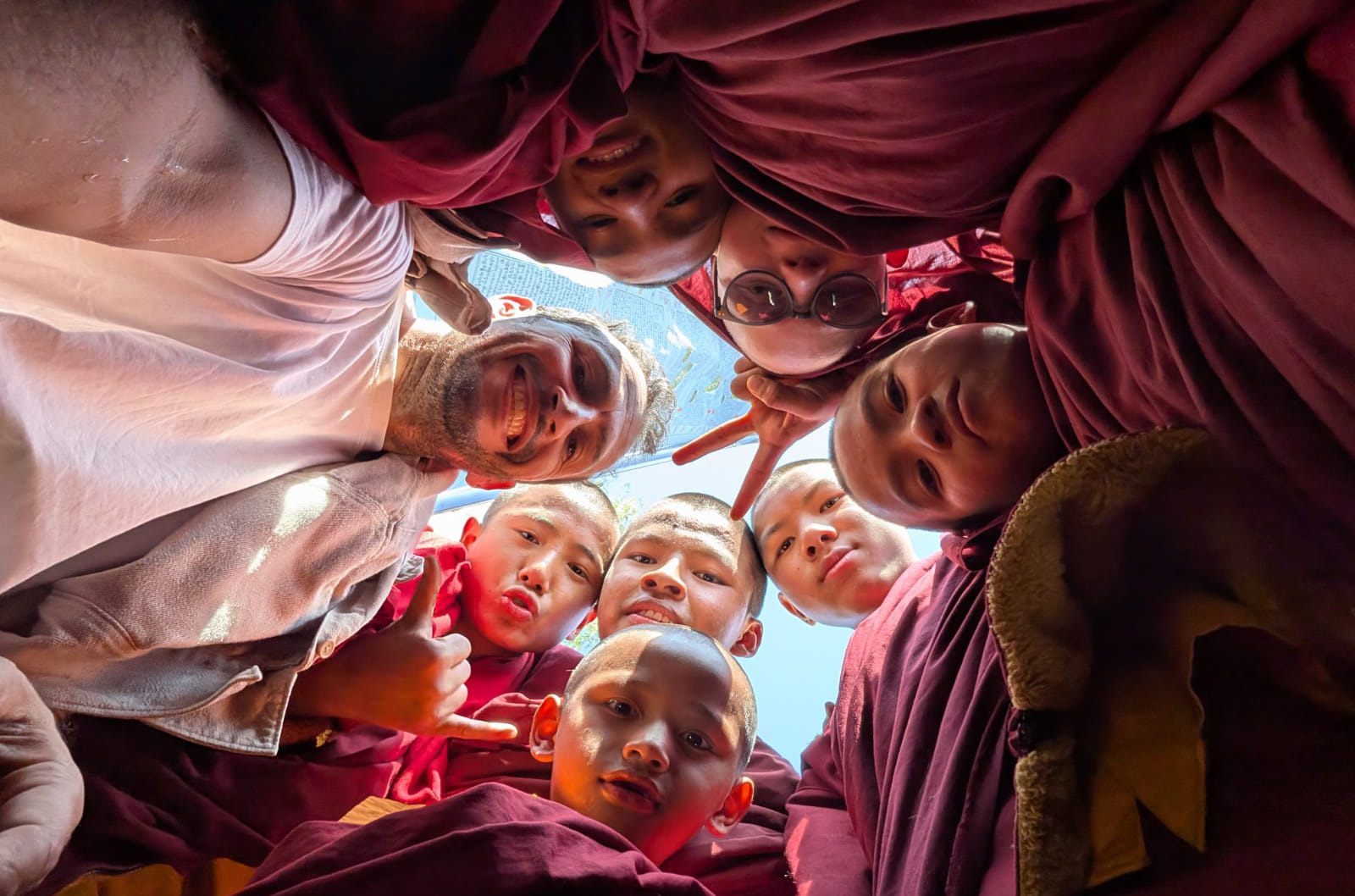
Enter the monastery and meet the monks and children. You are introduced to your accommodation, dining area, temple, rituals and daily environment. You begin noticing things you might miss during a short sightseeing visit—the sounds of prayer, meal times, daily routines and quiet moments between activities. |
Day 4: Your First Morning Prayer and Volunteer Activities |
Morning prayer and volunteering |
Wake up early and join the morning prayer before participating in volunteer activities. You begin interacting more closely with monks and children. The chanting, rituals and movements may initially feel unfamiliar, so simply watch, listen and follow respectfully. |
Day 5: Volunteering and Building Relationships |
Volunteer activities and interaction |
Continue volunteering while spending more time with the monks and children. By now, unfamiliar faces begin becoming familiar and simple everyday interactions start creating genuine connections. |
Day 6: Understanding Buddhism Through Daily Life |
Volunteering, observation and cultural learning |
Continue morning routines and volunteer activities while becoming more comfortable with monastery life. You begin understanding Buddhism through ordinary experiences—eating, observing monks, talking with children and spending quiet moments without constant distractions. |
Day 7: Your Final Day in the Monastery |
Morning prayer, volunteering and reflection |
Spend your final day following the monastery routine, joining morning prayer, volunteering and interacting with the people you have met during the week. Just when the environment begins feeling familiar, it may already be time to leave. |
What Can Be Difficult About Living in a Buddhist Monastery?
It is easy to romanticize monastery living before arriving.
You may imagine
- ✓Silence.
- ✓Meditation.
- ✓Mountains.
- ✓Prayer flags.
- ✓Inner peace.
Real life may be less perfect.
- ✓You may wake earlier than you normally do.
- ✓Your accommodation may be different from what you are used to.
- ✓You may sometimes feel unsure about what you should be doing.
- ✓Communication can occasionally be difficult.
- ✓You might even become bored.
And strangely, boredom can become part of the experience.
Modern life constantly gives us something to watch, scroll, answer or react to.
Take those things away and suddenly sitting quietly can feel difficult.
That doesn't necessarily mean the monastery experience isn't working.
Perhaps that is the experience.
7-Day Buddhist Monastery Volunteer Cost Breakdown
The supplied program information gives an overall approximate one-week cost of USD 220.
However, it does not provide a complete item-by-item breakdown, so I would not pretend that every expense below is included.
| Expense | Cost / Status | What to Check |
|---|---|---|
7-Day Volunteer Program |
Approx. USD 220 |
Confirm current program price |
International Flights |
Depends on flight and airlines you pick |
Normally budget separately |
Nepal Visa |
Fees are USD 30 for 15 days, USD 50 for 30 days, and USD 125 for 90 days. |
Depends on nationality/stay |
Travel Insurance |
Not specified |
Check before departure |
Personal Expenses |
Not specified |
Snacks, shopping, extra transport |
Extra Kathmandu Activities |
Not specified |
Ask whether sightseeing is included |
Airport Transfer |
Part of proposed arrival itinerary |
Confirm when booking |
Monastery Accommodation |
Part of monastery experience |
Confirm room arrangement |
Meals |
Dining facilities are mentioned |
Confirm exactly which meals are included |
The important point is this:
USD 220 should be understood as the approximate program cost given for the week, not automatically the total cost of your entire Nepal trip.
Before paying anything, ask for a written list of what is and isn't included.
Please click here to get the complete details on available programs, volunteer’s roles and activities , accommodation, cost, visa , vaccination, airport arrival and the rest of it.
Get More Info Now »
Simple 7-Day Route Map
Your journey can be understood very simply:
Tribhuvan International Airport
↓
Kathmandu Arrival & Rest
↓
Program Orientation
↓
Kathmandu Spiritual Introduction
↓
Buddhist Monastery
↓
Meet Monks & Children
↓
Morning Prayer + Volunteer Activities
↓
4 Days of Monastery Living, Interaction & Learning
It is not a complicated geographical journey.
The bigger journey is actually from observing Buddhist culture from outside to experiencing a small part of it from inside.
Who Is This 7-Day Monastery Experience Best For?
This experience can suit you particularly well if you are:
- Traveling alone
- Interested in Buddhism
- Curious about meditation
- Looking for meaningful travel
- Interested in volunteering abroad
- Comfortable with a simpler routine
- Looking for cultural immersion rather than only sightseeing
- An introvert who enjoys quiet personal space
- Someone who wants a break from a constantly busy schedule
You don't need to arrive looking for some dramatic spiritual transformation.
Sometimes people put too much pressure on spiritual travel.
They expect to return home as a completely different person.
Maybe you will.
Maybe you won't.
Perhaps you will simply sleep better, think differently about your daily routine or remember one conversation you had with someone in the monastery.
That can also be meaningful.
Final Thoughts: Is 7 Days in a Buddhist Monastery in Nepal Worth It?
A 7-day Buddhist monastery volunteer program in Kathmandu is not enough to fully understand Buddhism or monastery life.
But it is enough to experience the beginning of it.
Your first day is about arriving.
Your second is about understanding Kathmandu.
Your third takes you inside the monastery.
Then for the remaining days, you start waking early, joining prayer, volunteering, interacting with monks and children and becoming familiar with a different rhythm of life.
You arrive as a traveler looking at the monastery.
And slowly you begin experiencing it from inside.
For me, that is what makes this different from normal sightseeing.
You are not only standing outside a Buddhist monastery, taking a photograph and moving to the next attraction.
For a few days, you stay.
You observe.
You participate.
You volunteer.
You listen.
And perhaps somewhere between the morning prayer and the ordinary conversations of monastery life, you start noticing your own mind a little differently.
Sometimes seven days is not enough to find all the answers.
But it can be enough to start asking different questions.
Published on August 23, 2026
To share this link:
Please click here to get the complete details on available programs, volunteer’s roles and activities , accommodation, cost, visa , vaccination, airport arrival and the rest of it.
Get More Info Now »