


What Are the Deadliest Mountains to Climb? 10 Most Dangerous Mountains in the World
Last Updated: August 18, 2026
Tweet
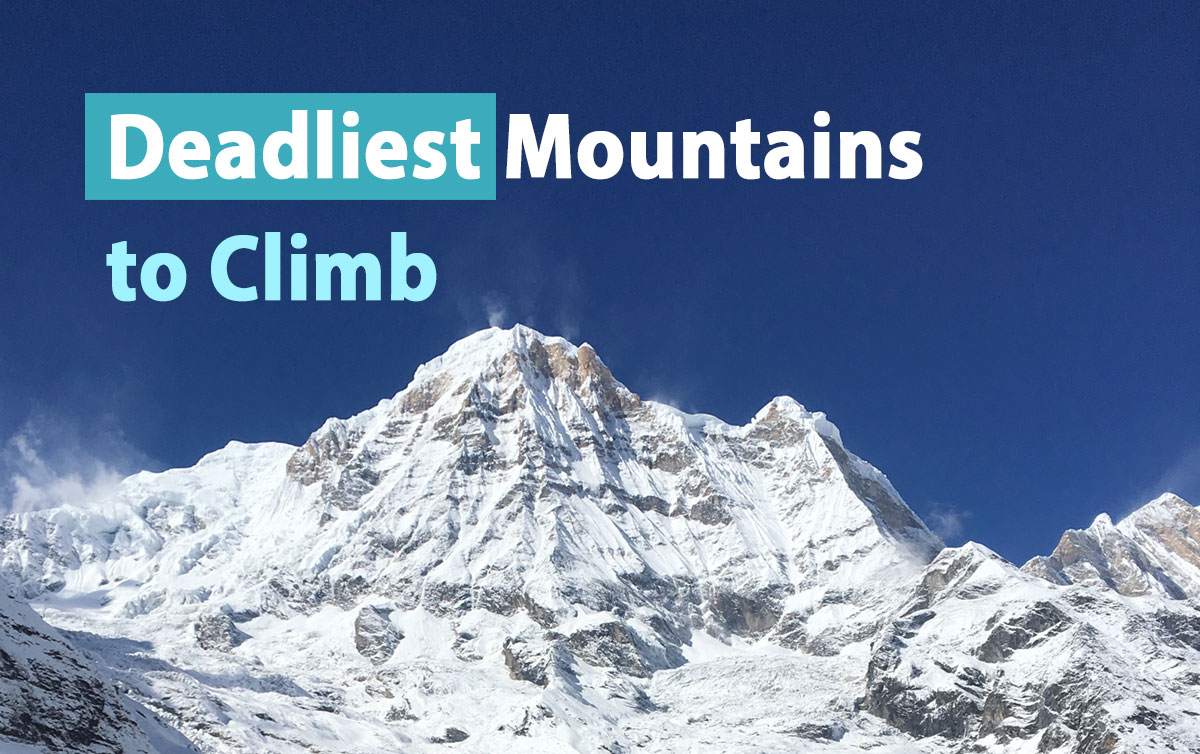
When we think about the most dangerous mountain to climb, Mount Everest is probably the first name that comes to our mind. It is the highest mountain in the world, thousands of climbers dream of reaching its summit, and we regularly hear tragic stories coming from Everest. But surprisingly, Everest is not necessarily the deadliest mountain.
While researching this blog, I was also surprised to find mountains that are much shorter than Everest but have created some of the most dangerous situations in mountaineering history.
Some mountains have avalanches, some have terrifying walls of ice, while others have weather that can completely change within a very short time.
Top 10 Most Dangerous Mountains in the World
We are glad that you liked our story on Top 10 Highest Peaks of Himalaya. Now let's explore what are the top 10 most dangerous mountains in the world? Well, there is no single official ranking because danger can be measured differently.
We can look at deaths compared with successful summits, technical difficulty, avalanches, weather, remoteness, or the total number of people who have died.
One important thing to understand is that historical death-to-summit ratios are not the same as the probability that a climber attempting a mountain today will die. Better weather forecasting, climbing equipment, fixed ropes, experienced guides and rescue systems have changed mountaineering considerably over time.
Lets have a look on these mountains one by one:
1. Annapurna I, Nepal – 8,091 m
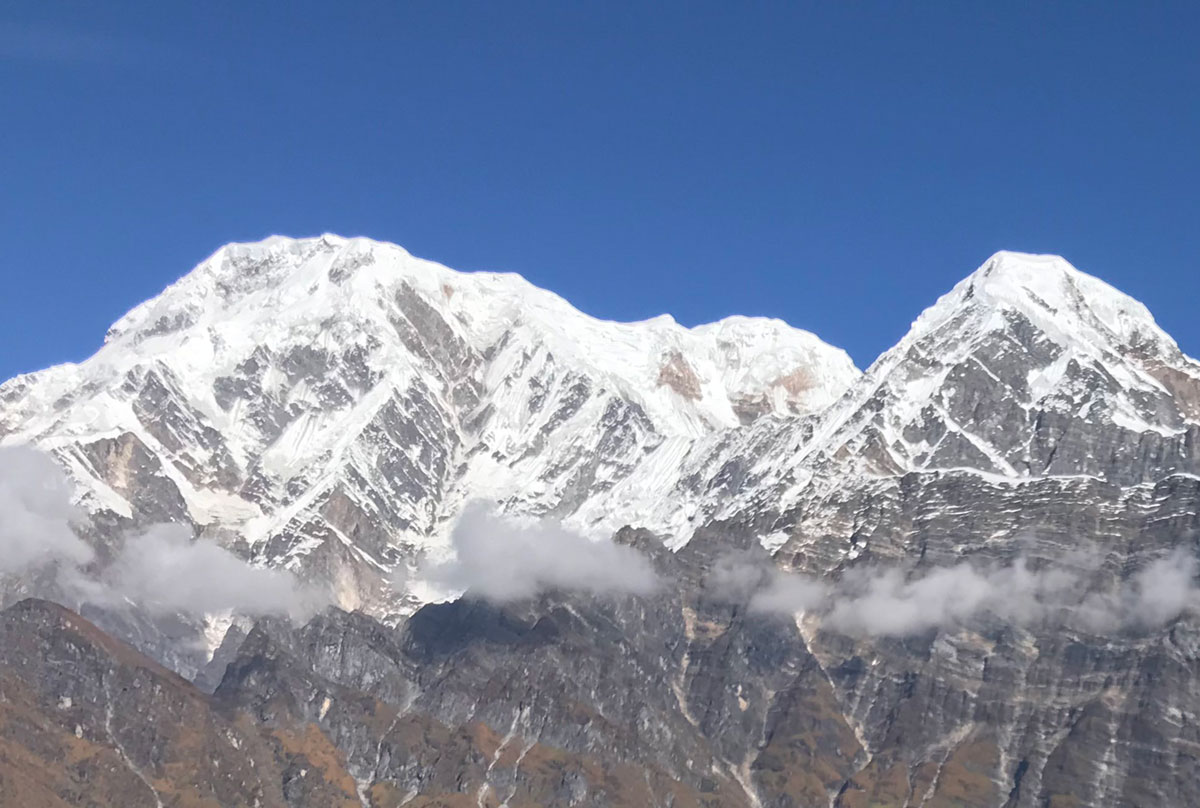
Let us begin with one of Nepal's most beautiful but frightening mountains, Annapurna I.
At 8,091 meters, Annapurna I is the tenth-highest mountain in the world. But height is not what gives Annapurna its deadly reputation. According to Guinness World Records, using Himalayan Database figures, Annapurna I recorded 75 deaths against 559 climbs in the figures it reported, giving a death-to-climb ratio of 13.42%. That was slightly higher than Dhaulagiri in the same dataset.
The biggest danger on Annapurna comes from unstable snow, avalanches, seracs and rapidly changing weather. A serac is a huge block or tower of glacier ice that can collapse without giving climbers much warning.
This means that being experienced does not remove every danger. A climber can make the right decisions and still find himself or herself exposed to an avalanche or collapsing ice.
This is what makes Annapurna different. You are not simply fighting your physical limits. Sometimes you are also waiting for the mountain to decide what happens next.
2. K2, Pakistan/China – 8,611 m
If Annapurna frightens climbers because of its objective dangers, K2 frightens them for another reason: almost every part of climbing it is serious.
At 8,611 meters, K2 is the second-highest mountain on Earth. It stands in the Karakoram on the Pakistan-China border and is widely considered more technically difficult than Everest. Its steep faces, exposed climbing and unpredictable weather leave little space for mistakes.
One of its most dangerous places is known as the Bottleneck. It is a narrow and steep section at around 8,200 meters, directly below huge hanging seracs. Climbers have to move underneath this unstable ice while already suffering from the lack of oxygen found above 8,000 meters.
The danger became horrifyingly clear in August 2008 when 11 climbers died during a series of incidents on K2, many connected with icefall and problems around the Bottleneck.
This is why K2 is often described as one of the hardest mountains in the world.
Everest may be higher, but K2 gives climbers almost no easy way out.
3. Dhaulagiri I, Nepal – 8,167 m
Dhaulagiri looks incredibly peaceful when seen from a distance. Its white slopes rise beautifully above Nepal, but that beauty hides a very dangerous mountain.
At 8,167 meters, Dhaulagiri I is the seventh-highest mountain in the world. In the Guinness figures mentioned earlier, it recorded 92 deaths against 707 climbs, giving it a 13.01% ratio, almost equal to Annapurna I in that dataset.
Climbers face avalanches, strong winds, difficult route finding and weather that can keep teams trapped at high camps for days.
This is particularly dangerous because time becomes extremely important at high altitude. Your body is getting weaker, food and fuel are limited and weather can prevent you from moving either up or down.
On mountains like Dhaulagiri, sometimes waiting itself becomes part of the danger.
4. Nanga Parbat, Pakistan – 8,126 m
There is probably no mountain nickname more frightening than “Killer Mountain.”
Nanga Parbat earned this reputation after numerous deaths during early attempts to climb it. Long before modern equipment and weather forecasting were available, expeditions faced an enormous mountain of rock, snow and ice.
One of its most incredible features is the Rupal Face. It rises roughly 4,600 meters from the valley below and is often described as one of the tallest continuous mountain faces on Earth.
Just imagine standing below a wall of mountain several kilometers high and knowing that your journey has only begun.
Nanga Parbat also has difficult weather, avalanche exposure and remote climbing routes. These conditions explain why its dark reputation has remained part of mountaineering history even after climbing technology has improved.
5. Kangchenjunga, Nepal/India – 8,586 m
Kangchenjunga is the third-highest mountain in the world and another mountain where height is only part of the challenge.
The mountain rises to 8,586 meters along the Nepal-India border. It is remote, exposed to severe weather and highly vulnerable to snowfall and avalanches. Rescue can also be more difficult because climbers are operating far from the infrastructure available around mountains like Everest.
The Guinness Himalayan figures list 54 deaths against 690 climbs, or 7.83%, for Kangchenjunga.
There is also something deeply interesting about Kangchenjunga beyond its danger. The mountain is sacred to communities around it, and climbers have traditionally shown respect for this spiritual importance.
For me, stories like this make mountains much more than rocks covered by snow. They become part of culture, belief and human history.
6. Makalu, Nepal/China – 8,485 m
Makalu has one of the most beautiful shapes among the world's highest mountains. It rises like a giant pyramid into the sky.
But this pyramid is not easy to climb.
At 8,485 meters, Makalu is the fifth-highest mountain in the world. Its steep ridges, exposed terrain and difficult summit pyramid make it one of the more technical 8,000-meter climbs.
Climbers already exhausted by high altitude must still complete demanding climbing close to the summit. Strong winds can make these exposed sections even more dangerous.
Guinness's Himalayan figures record 51 deaths against 891 climbs, giving Makalu a ratio of 5.72% in that dataset.
This is another reminder that reaching close to the top does not mean the hardest part is finished.
Sometimes, the mountain saves its biggest challenge for the end.
7. The Eiger, Switzerland – 3,967 m
Now let us leave the giants of Asia and travel to Europe.
The Eiger is only 3,967 meters high. Compared with Everest, K2 or Annapurna, it might almost look small.
But its famous North Face has created fear among climbers for generations.
The wall rises approximately 1,800 meters and contains rock, ice and extremely exposed climbing. Rockfall, avalanches and sudden weather have contributed to many accidents. The face became associated with the German nickname Mordwand, or “Murder Wall,” a play on the German word Nordwand, meaning North Wall.
The Eiger teaches us perhaps one of the most important things about mountaineering.
A mountain does not need to reach 8,000 meters to kill.
Technical difficulty can be just as dangerous as altitude.
8. Baintha Brakk – The Ogre, Pakistan – 7,285 m
Even its nickname tells you something about this mountain.
Baintha Brakk, better known as The Ogre, rises to around 7,285 meters in Pakistan's Karakoram. Unlike Everest, this is not a mountain visited by large numbers of commercial climbing teams.
It is known for extreme technical climbing, isolation and very limited opportunities for rescue.
The first ascent was completed in 1977 by Doug Scott and Chris Bonington. What makes the history even more remarkable is that another successful ascent did not follow until 2001, 24 years later.
The Ogre shows a different kind of danger.
It is not famous because thousands of people attempt it. It is famous because very few people have the ability and opportunity to climb it successfully.
9. Mount Everest, Nepal/China – 8,848.86 m
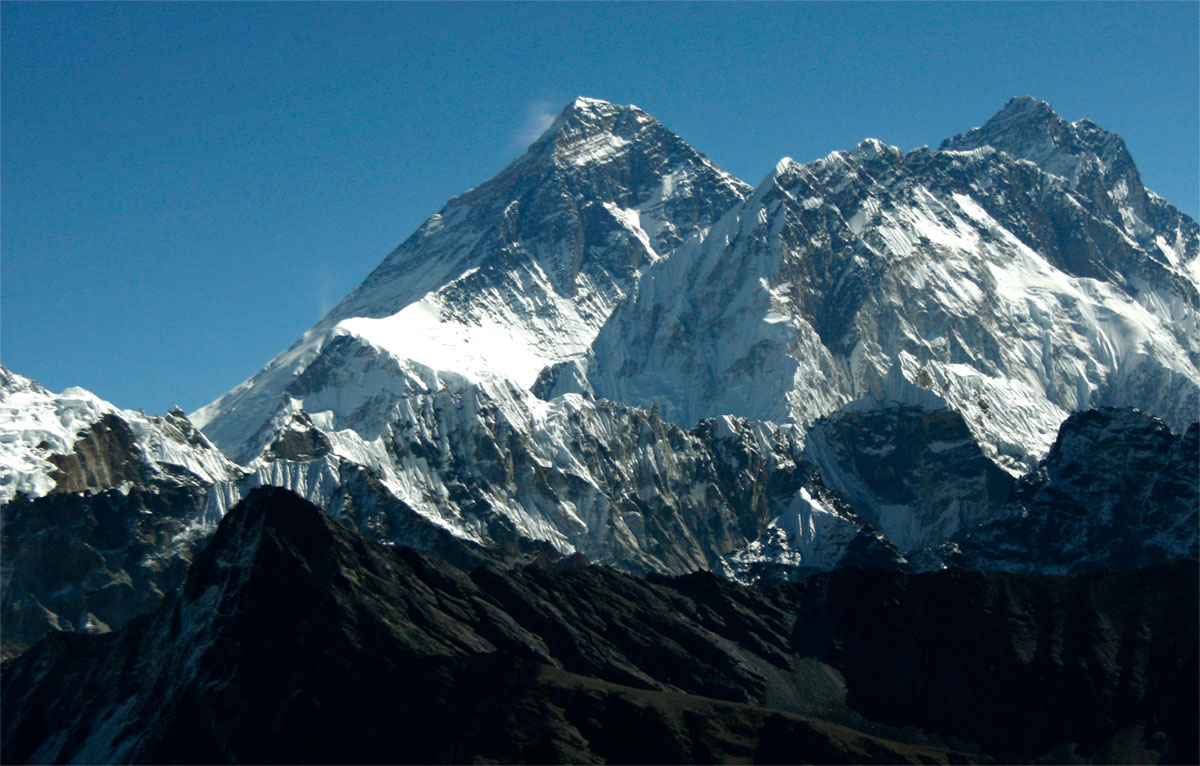
Finally, we reach the mountain everyone knows.
Mount Everest is the highest mountain in the world and probably the most famous mountain on Earth. However, its enormous popularity sometimes gives people the wrong idea that modern Everest expeditions are somehow safe.
They are not.
Above approximately 8,000 meters, climbers enter what is known as the Death Zone. At this altitude, there is so little oxygen that the human body cannot properly recover. Climbers gradually lose strength, judgment becomes more difficult and every movement requires enormous energy.
Everest also has crevasses, avalanches, extreme cold, exhaustion and dangerous sections such as the Khumbu Icefall on its Nepal side.
Another modern challenge is the sheer number of people attempting the mountain during favorable weather windows. Long waits high on Everest can increase the amount of time climbers spend exposed to dangerous altitude.
The Guinness figures cited above record 344 deaths against 13,752 climbs, or 2.5%, which is considerably below Annapurna and Dhaulagiri in that particular death-to-climb comparison.
So Everest may be the highest mountain, but it is not automatically the most dangerous mountain to climb by every statistical measure.
10. Matterhorn, Switzerland/Italy – 4,478 m
Our final mountain is perhaps one of the most beautiful on this list.
The Matterhorn rises to 4,478 meters on the border between Switzerland and Italy. Its almost perfect pyramid shape has made it one of the most recognisable mountains in the world.
But behind this beauty is a long history of tragedy.
Official Zermatt information states that nearly 600 people have died on the Matterhorn since the nineteenth century, with an average of around six deaths per year in its factsheet.
Loose rock, falls, changing weather, route-finding problems and crowded climbing routes all contribute to the danger.
Like the Eiger, Matterhorn proves again that altitude is only one part of mountaineering.
A 4,000-meter mountain can sometimes present challenges that should never be underestimated.
What Is the Most Dangerous Mountain to Climb?
If we are looking at published death-to-climb ratios for major Himalayan 8,000-meter mountains, Annapurna I is one of the clearest answers to the question of the most dangerous mountain to climb.
The Guinness World Records comparison based on Himalayan Database figures placed Annapurna I at 13.42%, slightly above Dhaulagiri's 13.01%.
However, statistics do not tell the complete story.
If technical difficulty is given more importance, many mountaineers would place K2 among the most dangerous challenges. If we measure total historical deaths instead, popular mountains in Europe can also appear extremely deadly.
Therefore, there is no perfect mathematical answer.
The mountain, route, season, experience of the climber and weather all matter.
What Is the Most Dangerous Mountain Range in the World?
When discussing the most dangerous mountain range in the world, two names dominate the conversation: the Himalayas and the Karakoram.
The Himalayas contain dangerous giants including Annapurna I, Everest, Dhaulagiri, Kangchenjunga and Makalu. Nepal alone has eight of the world's fourteen 8,000-meter peaks, and the Himalayan Database maintains detailed expedition records for Nepal's major climbing mountains.
The Karakoram, meanwhile, includes K2 and highly technical peaks such as Baintha Brakk. K2 itself sits within the Karakoram rather than the Himalayas.
Both regions combine extreme altitude, avalanches, glaciers, violent weather, difficult rescue conditions and long periods of exposure.
For this reason, I would not simply call one range dangerous and the other safe. Together, the Himalaya-Karakoram region contains an extraordinary concentration of the world's most serious mountaineering challenges.
What Is the Most Dangerous Mountain in Europe?
The answer depends on exactly what we mean by dangerous.
The Matterhorn is one of the strongest answers for the most dangerous mountain in Europe when looking at its long record of climbing fatalities. Official information from Zermatt notes nearly 600 deaths associated with the mountain.
Please click here to get the complete details on available programs, volunteer’s roles and activities , accommodation, cost, visa , vaccination, airport arrival and the rest of it.
Get More Info Now »
However, the Eiger's North Face may be more frightening when technical difficulty is considered. Its enormous wall has a long history of fatal climbing accidents and remains one of Europe's most serious alpine routes.
Mont Blanc also deserves mention because its popularity has resulted in a significant number of accidents over its long climbing history.
So, just like the global ranking, the answer changes depending on whether we measure total deaths, fatality rate or technical difficulty.
Why Are These Mountains So Dangerous?
After learning about all these mountains, you may be wondering what actually makes climbing them so dangerous.
There is no single reason.
Avalanches and Falling Ice
Avalanches are among the biggest threats on high mountains. Fresh snow, unstable slopes and changing temperatures can release enormous quantities of snow within seconds.
Seracs create another danger. These giant pieces of glacier ice can collapse unexpectedly and leave climbers almost no chance to escape.
Avalanches have historically been an important cause of mountaineering deaths across the Himalayas.
Altitude Sickness
Above 8,000 meters is the famous Death Zone.
There is not enough oxygen for the human body to function normally for long periods. Climbers can become confused, exhausted and seriously ill.
This is particularly dangerous because someone suffering from altitude problems may not realise how badly their judgment has already been affected.
Extreme Weather
Clear skies can quickly disappear behind clouds, snow and strong winds.
A climber who was comfortable only a few hours earlier may suddenly find himself trapped in a whiteout without being able to see the correct route.
On these mountains, weather is not just an inconvenience.
It can decide whether somebody comes home.
Technical Climbing
Mountains such as K2, Makalu, the Eiger and Baintha Brakk demand significant climbing ability.
Climbers may need to cross steep ice, exposed rock, narrow ridges and difficult mixed terrain while carrying equipment and fighting exhaustion.
A mistake that would be minor closer to sea level can become fatal thousands of meters above the ground.
Final Thought
Mountains have always attracted people because they are beautiful, mysterious and challenging. Looking at Everest, Annapurna, K2 or Matterhorn from a photograph is inspiring. Standing on them is something completely different.
During my research for this blog, one thing became very clear to me: the tallest mountain is not always the deadliest mountain.
Annapurna shows us the danger of avalanches and unstable ice. K2 shows us the limits of technical climbing at extreme altitude. The Eiger and Matterhorn remind us that even mountains thousands of meters shorter than Everest can take hundreds of lives.
But these stories are not only about death.
Please click here to get the complete details on available programs, volunteer’s roles and activities , accommodation, cost, visa , vaccination, airport arrival and the rest of it.
Get More Info Now »
They are also stories of courage, preparation, friendship, difficult decisions and the human desire to discover places where very few people will ever stand.
Every mountain deserves respect.
And sometimes, the bravest decision a mountaineer can make is not to reach the summit, but to turn around and return home safely.
FAQs
Q1. What is the most dangerous mountain to climb in the world?
Annapurna I is commonly listed among the most dangerous major mountains when historical deaths are compared with successful climbs. Guinness World Records reported a 13.42% death-to-climb ratio in its Himalayan comparison.
Q2. Is K2 more dangerous than Everest?
K2 is generally considered technically harder to climb than Everest because of its steep terrain, difficult climbing sections, severe weather and dangerous areas such as the Bottleneck. Everest is higher and has its own major risks, but K2 offers climbers much less room for mistakes.
Q3. What is the most dangerous mountain range in the world?
The Himalayas and neighbouring Karakoram contain many of the world's most dangerous high-altitude climbing peaks. The Himalayas include Annapurna, Everest and Dhaulagiri, while the Karakoram includes K2 and Baintha Brakk.
Q4. What is the most dangerous mountain in Europe?
Matterhorn is one of the strongest candidates because of its long history of fatalities, with official Zermatt information reporting nearly 600 deaths. The Eiger's North Face, however, is one of Europe's most technically dangerous individual climbing routes.
Published on August 18, 2026
To share this link:
Please click here to get the complete details on available programs, volunteer’s roles and activities , accommodation, cost, visa , vaccination, airport arrival and the rest of it.
Get More Info Now »