


Nims Dai (Nirmal Purja): A Symbol of Courage and Mountains
How death of a mountaineer introduced mountains to the world differently.
Last Updated: August 13, 2026
Tweet
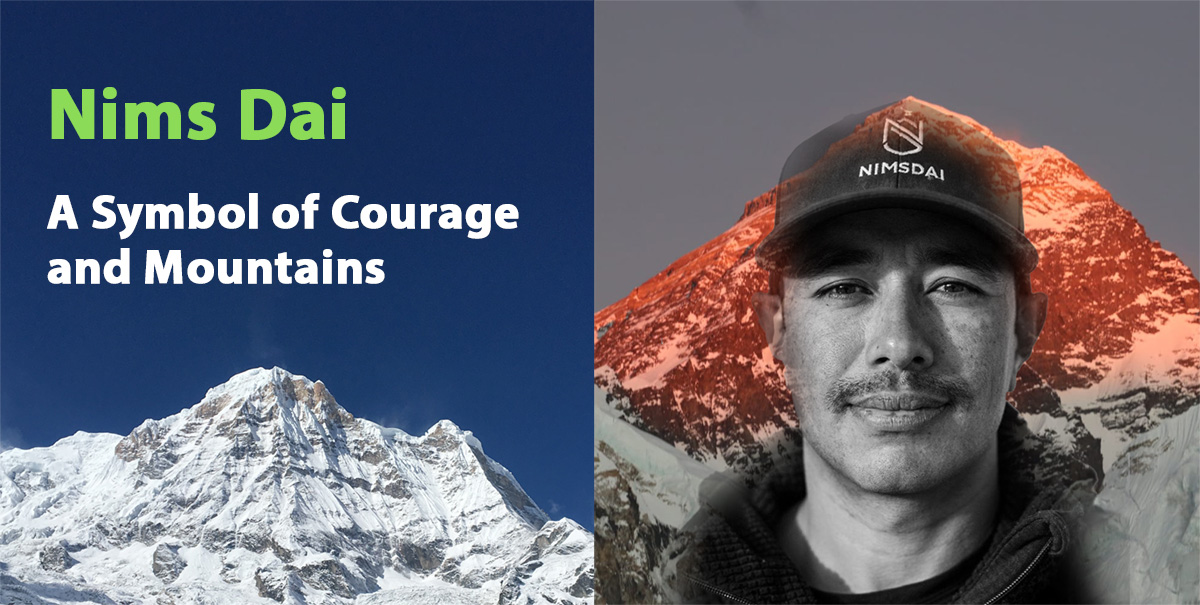
Mountains are beautiful, but behind this beauty there are also risks that we sometimes forget. Nirmal Purja, popularly known as Nims Dai, was one mountaineer who showed the world both sides of the mountains. He surprised everyone with his courage, speed and records, and showed what Nepali mountaineers are capable of doing on the highest peaks of the world.
Sadly, the same mountains where Nims Dai created history also became the place where his journey ended. He died after an avalanche struck his expedition on Broad Peak in Pakistan in July 2026. His death shocked Nepal and the entire mountaineering community.
While researching this story, one thing that surprised me is that Nims Dai was not someone who dreamed of climbing mountains from his childhood. His connection with the mountains came later in life. But once he found that connection, there was probably no looking back.
Also Read: Sleeping Beauty of Mount Everest >>
Nirmal Purja: Who Is Famed Mountaineer?
Nirmal Purja was born in the Myagdi region of Nepal and spent much of his childhood in Chitwan. Unlike many famous mountaineers, he did not grow up surrounded by high mountains or with a childhood ambition of becoming a climber. Instead, his dream was to become a Gurkha soldier like his father and brothers.
He achieved this dream in 2003 when he joined the Gurkhas at the age of 18. After serving for six years, Nims achieved another difficult goal. In 2009, he became the first Gurkha to join the UK Special Boat Service (SBS), where he spent another 10 years. His military career lasted around 16 years in total.
His life changed when he went trekking to Everest Base Camp in 2012 while on leave from the SBS. After returning from the trek, he wanted to experience the mountains differently. With the help of his guide Dorje Khatri, he climbed the 6,119-meter Lobuche East. It was his first mountain summit and the beginning of a completely different journey.
Where Is Nimsdai From?
Nims Dai was originally from the Myagdi district of Nepal and was raised in Chitwan. His early life was therefore very different from that of people who grow up in the Himalayan region surrounded by mountains.
Coming from a military family, his first ambition was not Everest or any other mountain. He wanted to follow the path of his father and brothers by joining the Gurkhas. The mountains entered his life much later, but eventually became the most important part of his identity.
Nims Dai and the Mountains
There is an interesting story behind Nims Dai's relationship with the mountains. While serving in the British military, his colleagues would often ask about Nepal and Mount Everest whenever he told them where he came from.
This made him think differently. He was from the country of Mount Everest, but he had never properly experienced its mountains. He once explained that those questions made him feel that he should climb a mountain in his own country.
His Everest Base Camp trek in 2012 gave him that first connection. Lobuche East followed shortly afterwards. From that small beginning, Nims Dai went on to climb the most difficult mountains on Earth.
But mountains were not only about personal records for him. One of his bigger goals was to show that Nepali climbers should not always be seen only as helpers, porters or guides working behind foreign mountaineers. He wanted Nepali mountaineers to be recognised as leaders capable of leading some of the biggest expeditions in the world.
What Is Nimsdai Purja Famous For?
Nirmal Purja became internationally famous because of his extraordinary speed in high-altitude mountaineering. His biggest breakthrough came through his 2019 expedition called Project Possible.
The idea sounded almost impossible. Nims wanted to climb all 14 mountains in the world that rise above 8,000 meters within seven months. Climbers normally spend years completing these mountains. Nims completed his 2019 campaign in just 6 months and 6 days.
His journey later became the subject of the Netflix documentary 14 Peaks: Nothing Is Impossible, which introduced Nims Dai and the abilities of Nepali mountaineers to millions of people around the world.
However, his popularity was not only because of how quickly he climbed. Nims Dai became known for his confidence, leadership, rescue efforts and his belief that something described as impossible could become possible with preparation and determination.
Nirmal Purja 14 Peaks
There are only 14 mountains including the highest peaks of the Himalayas in the world above 8,000 meters. They are Everest, K2, Kangchenjunga, Lhotse, Makalu, Cho Oyu, Dhaulagiri, Manaslu, Nanga Parbat, Annapurna, Gasherbrum I, Broad Peak, Gasherbrum II and Shishapangma.
In 2019, Nims Dai climbed these mountains under Project Possible in just 6 months and 6 days. During the same campaign, he completed all five of Pakistan's 8,000-meter mountains—K2, Nanga Parbat, Broad Peak, Gasherbrum I and Gasherbrum II—in only 23 days.
His 2019 achievement was celebrated worldwide as a record at the time. Later, Guinness revised its recognition under stricter true-summit rules because his accepted 2019 points on Manaslu and Dhaulagiri were not considered the geographical true summits. Nims later reached the true summits of both mountains in 2021.
Still, this does not change how Project Possible transformed his career and the attention it brought towards Nepali mountaineering.
Nims Dai continued pushing himself. In October 2024, he completed all 14 peaks without supplementary oxygen in 2 years, 4 months and 28 days.
Nims Dai Record
Records almost became part of Nims Dai's identity. By the later stage of his career, his official achievement record listed 52 summits of 8,000-meter mountains, including 24 without supplementary oxygen, along with 18 Guinness World Records.
Another historic moment came on January 16, 2021, when Nims Dai became part of the 10-member Nepali team that completed the first-ever winter ascent of K2. Nims made his ascent without supplementary oxygen.
It was more than just another record. A team of Nepali mountaineers reached the summit together, making one of the most difficult achievements in modern mountaineering history.
How Many Times Has Nirmal Purja Climbed Everest?
At the time of his death, Nims Dai's official record listed nine ascents of Mount Everest, including one without supplementary oxygen.
His first Everest summit came in 2016. Interestingly, that climb also showed another side of his personality. During his descent, Nims helped rescue a climber who was in trouble high in the Death Zone.
Everest later became part of many of his record attempts, but his relationship with the mountain had actually started much earlier—with a simple trek towards Everest Base Camp.
Nirmal Purja and Broad Peak
Broad Peak is the 12th-highest mountain in the world, standing at around 8,051 meters in Pakistan's Karakoram range. It is located close to K2 and is one of the world's 14 eight-thousanders.
Broad Peak was not new to Nims Dai. During Project Possible in 2019, he climbed Broad Peak after completing K2. It was part of his incredible 23-day campaign to climb all five of Pakistan's 8,000-meter mountains.
He continued returning to Broad Peak during his later climbing career. By September 2025, his Hat-Trick Challenge record showed three Broad Peak summits. The larger Hat-Trick project aimed to complete all 14 eight-thousanders and the Seven Summits three times each.
Then, in July 2026, Nims returned once again to Broad Peak. According to his own social media message before the expedition, Broad Peak was not originally part of his immediate plan. His plan changed while he was already in Pakistan.
Sadly, this return to Broad Peak became his final expedition.
What Happened to Nirmal Purja?
THE MISSION SHIFTS. THE COMPASS HOLDS.
— Nirmal Purja MBE (@nimsdai) July 27, 2026
This was never the plan. Initially, the plan was to climb just G2. But just before setting off for Pakistan, I ran the numbers on my 8000m summits. That’s when it hit me: if I tick off Broad Peak whilst I’m here , only one remains “Cho… pic.twitter.com/rovJzFcazP
On July 30, 2026, Nims Dai was leading an international climbing expedition on Broad Peak when a massive avalanche struck the group. Nims and nine other climbers were caught in the disaster.
Initially, there was uncertainty about what had happened because the climbers were missing and rescue teams faced extremely difficult conditions. Drone searches and rescue operations were later used to locate the climbers.
On August 1, Elite Exped, the climbing company founded by Nims Dai, officially confirmed that Nirmal Purja had lost his life following the Broad Peak avalanche. All 10 members caught in the disaster were ultimately confirmed dead.
His death was difficult to believe for many people. This was a man who had spent years surviving the Death Zone, climbing the most dangerous mountains and returning from situations where very few people could survive.
But mountains do not differentiate between experienced climbers and beginners. This tragedy again showed the world that even the strongest mountaineer can never completely control nature.
You Might be Also Interested: Green Boots Everest >>
Nims Dai Avalanche and Death on Broad Peak
Before his final Broad Peak attempt, Nims Dai had written about the change in his climbing plan with the words, “The Mission Shifts. The Compass Holds.”
Only a few days later, the avalanche changed everything.
The accident happened during the group's movement up Broad Peak. Difficult weather and terrain made rescue and recovery extremely challenging. Nims Dai's body and those of several other climbers were later recovered from the mountain and transported from Broad Peak.
The supplied reports described the death as a shock not only for Nepal but for the international climbing world. Nims had built his identity around doing things that people considered impossible, from climbing 14 peaks in a few months to completing K2 in winter.
His death therefore introduced the mountains to the world differently once again. His achievements showed their possibilities, while his final climb reminded everyone about their unpredictable power.
Please click here to get the complete details on available programs, volunteer’s roles and activities , accommodation, cost, visa , vaccination, airport arrival and the rest of it.
Get More Info Now »
Nims Dai and Trekking
When we hear the name Nims Dai today, we immediately imagine dangerous summits, the Death Zone and 8,000-meter mountains. But his mountaineering story actually started with trekking.
In 2012, while taking leave from his military service, he decided to trek to Everest Base Camp. That journey developed his interest in climbing. Instead of simply returning home after the trek, he asked his guide to teach him how to climb and soon successfully climbed Lobuche East.
For me, this is one of the most interesting parts of Nims Dai's story. A trek that might have been only another adventure in someone's life completely changed the direction of his.
From Everest Base Camp, he eventually reached Everest itself, K2, Broad Peak and every other 8,000-meter mountain in the world.
Nimsdai's Inspiring Mindset
Nims Dai became famous for the belief that nothing is impossible. When people told him climbing all 14 peaks in seven months could not be done, he named his mission Project Possible.
His mindset came from more than physical strength. Years in the military had taught him discipline, planning, decision-making and how to remain focused in difficult situations. These qualities later became very important when he moved into high-altitude mountaineering.
He also had the confidence to dream bigger after every achievement. Completing one challenge normally became the beginning of another.
His message was simple: limitations are sometimes created by what we believe is possible. Nims Dai spent his life trying to move those limitations a little higher.
Tributes to Nims Dai Mountaineering Legacy
After the news of his death was confirmed, tributes came from Nepal and around the world. Nepal's Prime Minister Balendra Shah remembered the courage and contribution of the climbers, while UK Defence Minister Wes Streeting also paid tribute to Nims Dai's military service and mountaineering achievements.
But perhaps his biggest legacy is what he did for the recognition of Nepali mountaineers.
For decades, Nepali climbers played essential roles in Himalayan expeditions, but international attention often remained focused on foreign climbers. Nims Dai helped change this perception. He showed that Nepali climbers were not only people who helped others reach the summit; they could organise expeditions, break world records and lead global mountaineering.
Through his records, expeditions and international recognition, he gave younger Nepali climbers something important—the confidence that they could stand at the front of world mountaineering.
Final Thought
Nirmal Purja was not born dreaming about mountains. His first dream was to become a Gurkha soldier. But a simple Everest Base Camp trek introduced him to another world, and eventually he became one of the most recognised mountaineers of his generation.
From completing Project Possible to climbing K2 in winter, reaching Everest nine times and repeatedly entering the world's most dangerous high-altitude environments, Nims Dai spent his life challenging what people believed could be done.
Sadly, his journey ended in the Broad Peak avalanche of 2026. The mountain that had previously been part of his greatest achievements became the place of his final expedition.
But Nims Dai's story is not remembered only because of his death or records. He changed how the world looked at Nepali mountaineers. He showed courage, leadership and the ability to dream beyond normal limitations.
Nims Dai climbed mountains, but more importantly, he helped raise the identity of Nepali mountaineering to another height. In that way, his name will continue to live whenever another climber looks towards an impossible peak and decides to try.
Please click here to get the complete details on available programs, volunteer’s roles and activities , accommodation, cost, visa , vaccination, airport arrival and the rest of it.
Get More Info Now »
FAQs
Q1. Where is Nimsdai from?
Nirmal Purja, popularly known as Nims Dai, was born in the Myagdi region of Nepal and raised in Chitwan. He later joined the Gurkhas before becoming a member of the UK Special Boat Service.
Q2. What is Nimsdai Purja famous for?
Nimsdai Purja is famous for Project Possible, in which he completed his 2019 campaign across all 14 mountains above 8,000 meters in only 6 months and 6 days. He also became part of the first Nepali team to successfully climb K2 in winter.
Q3. How many times did Nirmal Purja climb Everest?
Nirmal Purja's official achievement page lists nine successful Mount Everest ascents, including one without supplementary oxygen. His first Everest summit was in 2016.
Q4. What happened to Nirmal Purja?
Nirmal Purja was caught in an avalanche while leading an expedition on Broad Peak in Pakistan on July 30, 2026. Elite Exped officially confirmed his death on August 1, 2026.
Q5. Did Nirmal Purja climb Broad Peak?
Yes, Nirmal Purja climbed Broad Peak multiple times during his mountaineering career. Broad Peak was also part of his famous 2019 Project Possible campaign and became the location of his final expedition in 2026.
Published on August 13, 2026
To share this link:
Please click here to get the complete details on available programs, volunteer’s roles and activities , accommodation, cost, visa , vaccination, airport arrival and the rest of it.
Get More Info Now »