


How to Join a Buddhist Monastery Volunteer Program from Germany in 2026
Last Updated: January 2, 2026
Tweet
As a German traveller planning for 2026, staying in a Buddhist monastery can be a simple yet powerful way to slow down, reflect, and live closer to your values. Whether you dream of waking up to monks’ chants in Nepal, joining a forest meditation retreat in Thailand, or living in a coastal temple in Sri Lanka, there are many ways to combine travel, volunteering, and spiritual practice.
Most monastery programs for international visitors are short to mid-term. You can stay for 1 to 4
weeks, and in many cases, you can extend your stay if you and the monastery are happy with the
arrangement. Costs are often very modest, based mainly on donations to cover food and lodging,
usually around €10–50 per day. From Germany, round-trip flights to Nepal, Thailand, or Sri
Lanka typically range from €75 to €1,100. The focus is always on simple living,
respect, and willingness to learn.
Below, we look at how German travellers can join Buddhist monasteries in 2026, with a special focus on women, men, LGBTQ+ travellers, and the costs involved, as well as practical travel from Germany.
How to join a monastery for a German female
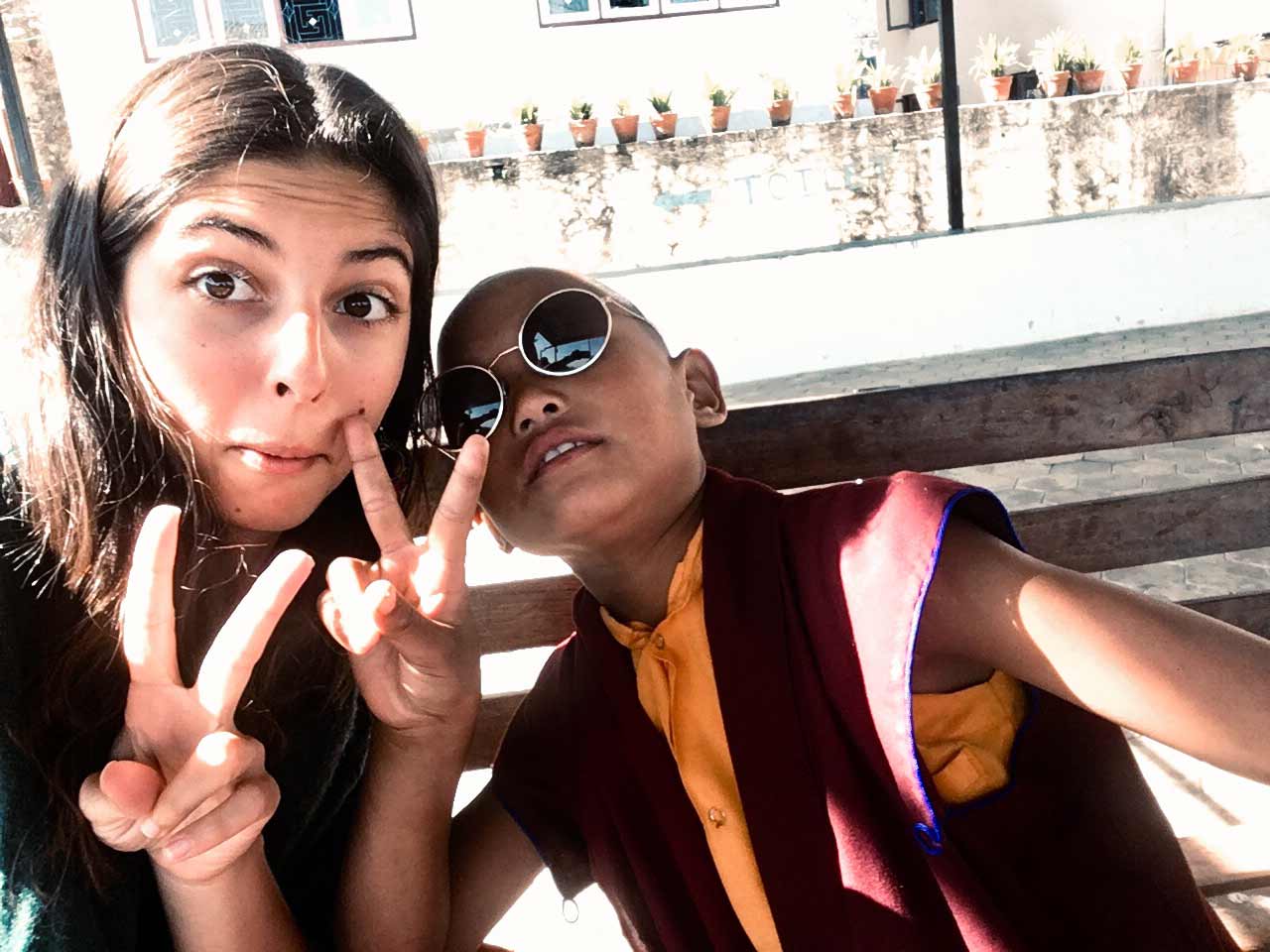
As a German woman, you will find many Buddhist monasteries and nunneries that welcome you with
respect and kindness, provided you are willing to live simply and follow the community's rules. In
Nepal, places like Kopan Monastery near Kathmandu often host international women for courses and
retreats. Some nunneries around Boudhanath also welcome volunteers to teach basic English to nuns
and young students while you join prayers and meditation.
In Thailand, forest monasteries and meditation centres, such as Wat Pa Tam Wua in Mae Hong Son,
and other international retreat centres often organise silent retreats and structured programs in
which women participate equally in meditation, chanting, and daily chores. These centres are used
to host women from Europe and provide clear guidelines about dress and behaviour.
In Sri Lanka, nunneries and meditation centres near Kandy, Dambulla, or Colombo sometimes invite foreign female volunteers to assist with English teaching or light duties. As a German female traveller, you will need to dress modestly (long skirts or loose trousers, covered shoulders) and stay in women-only or separate accommodation. If you write clearly about your intentions and ask practical questions before you go, you can find a safe and respectful environment to practice and volunteer.
How to join a monastery for a German male
For German men, there are similar opportunities, with some extra options for temporary ordination
if you feel drawn to that path. In Nepal, volunteer programs at monasteries around Kathmandu and
in the Boudhanath area often place male volunteers as English teachers for young monks. You live
inside or near the monastery, join morning and evening prayers, and help with daily
responsibilities.
In Thailand, many forest monasteries and city temples open their doors to foreign men who wish to
meditate, observe the monastic routine, and sometimes take temporary novice vows. Projects in
Chiang Mai or central Thailand may offer one-month “monk life” experiences where you
shave your head, wear robes, and follow a strict daily schedule of chanting, meditation, and
study.
Sri Lanka also has Pirivena (monastic colleges) and monasteries around Kandy and the Cultural Triangle, where foreign male guests can stay and support English-language teaching or community work. As a German male visitor, you should be ready for early mornings, simple vegetarian food, and limited personal comfort. The main priority is to show respect, follow the monks' guidance, and maintain a humble attitude throughout your stay.
Please click here to get the complete details on available placement, classes, accommodation, cost, visa, airport arrival and the rest of it.
Get More Info Now »
Buddhist monastery stay for LGBTQ+
Buddhist teachings themselves focus on compassion, non-violence, and understanding of the mind
rather than on a person’s gender identity or sexual orientation. However, the social and
legal environment can still differ between countries. As an LGBTQ+ traveller from Germany, it is
essential to choose your destination carefully.
Nepal is one of the most progressive countries in Asia regarding LGBTQ+ rights. Monasteries
around Kathmandu, such as Kopan or other international centres, are primarily concerned with your
sincerity and willingness to practice. The atmosphere is generally relaxed and focused on Dharma,
not on your private life.
Thailand also has a reputation for being friendly and open, and many meditation centres naturally
welcome LGBTQ+ participants, especially in international or forest retreat settings. However,
traditional monastic communities can still be conservative, so it is better not to make your
orientation a topic of discussion within the monastery.
Sri Lanka remains more conservative, both socially and legally. Buddhist monasteries are kind and compassionate in practice, but it is safer to be discreet and keep your personal life private. In all three countries, monasteries usually look at your intention, discipline, and respect. If you act modestly and follow the rules, you can have a peaceful stay as an LGBTQ+ traveller.
Live in a Buddhist monastery as a German
Living
in a Buddhist monastery as a German traveller is usually possible for several weeks,
and sometimes for a few months, if you build a good relationship with the community. Most visitors
start with a shorter retreat or volunteer program. After that, if both you and the monastery feel
comfortable, you can discuss extending your stay.
In Nepal, you might stay in a Tibetan Buddhist monastery in Boudhanath or at a monastery in the
foothills with views of the Himalayas. Daily life may include morning chanting, meditation, meals
in silence, English classes for young monks, and some light domestic work. In Thailand, you might
live in a forest monastery, join alms rounds at dawn, help clean the grounds, and attend evening
teachings. In Sri Lanka, you may live close to ancient temples, join meditation sessions, and
support English lessons or simple projects.
As a German citizen, your English and sometimes basic German can be valuable when helping monks or nuns improve their language skills. In return, you get to experience their rhythm of life, their discipline, and their way of thinking. This exchange of learning and sharing is at the heart of the monastery stay.
Please click here to get the complete details on available placement, classes, accommodation, cost, visa, airport arrival and the rest of it.
Get More Info Now »
How to become a Buddhist monk as a German woman
Becoming a Buddhist nun as a German woman is different from joining a short-term volunteer
program. It requires serious commitment, long-term training, and a readiness to follow many
precepts. For most women, the path begins with simple steps: a retreat, a short stay in a nunnery,
and ongoing contact with a teacher or community.
In Nepal, Tibetan Buddhist nunneries often host Western women for retreats and sometimes offer a
clear path towards novice ordination. You might first join a one-month course, then return for
more extended stays, and slowly grow into the community. Over time, if you and your teachers feel
it is appropriate, you can become a novice nun and later receive full ordination.
In Thailand and Sri Lanka, the situation for full bhikkhuni ordination is more complex. In some
places, women take on roles similar to those of nuns, such as mae chee in Thailand, who wear white
robes and live a celibate life of practice. In Sri Lanka, there are nunneries where women train
seriously and can receive full Theravada ordination within specific lineages.
As a German woman, the first realistic step is not to ask, “How can I become a nun immediately?”, but rather, “Where can I stay, study, and practice with nuns stably?” Once you build a long-term relationship with a nunnery, your teachers will guide you through the proper stages of training and ordination.
Join a monastery for a month
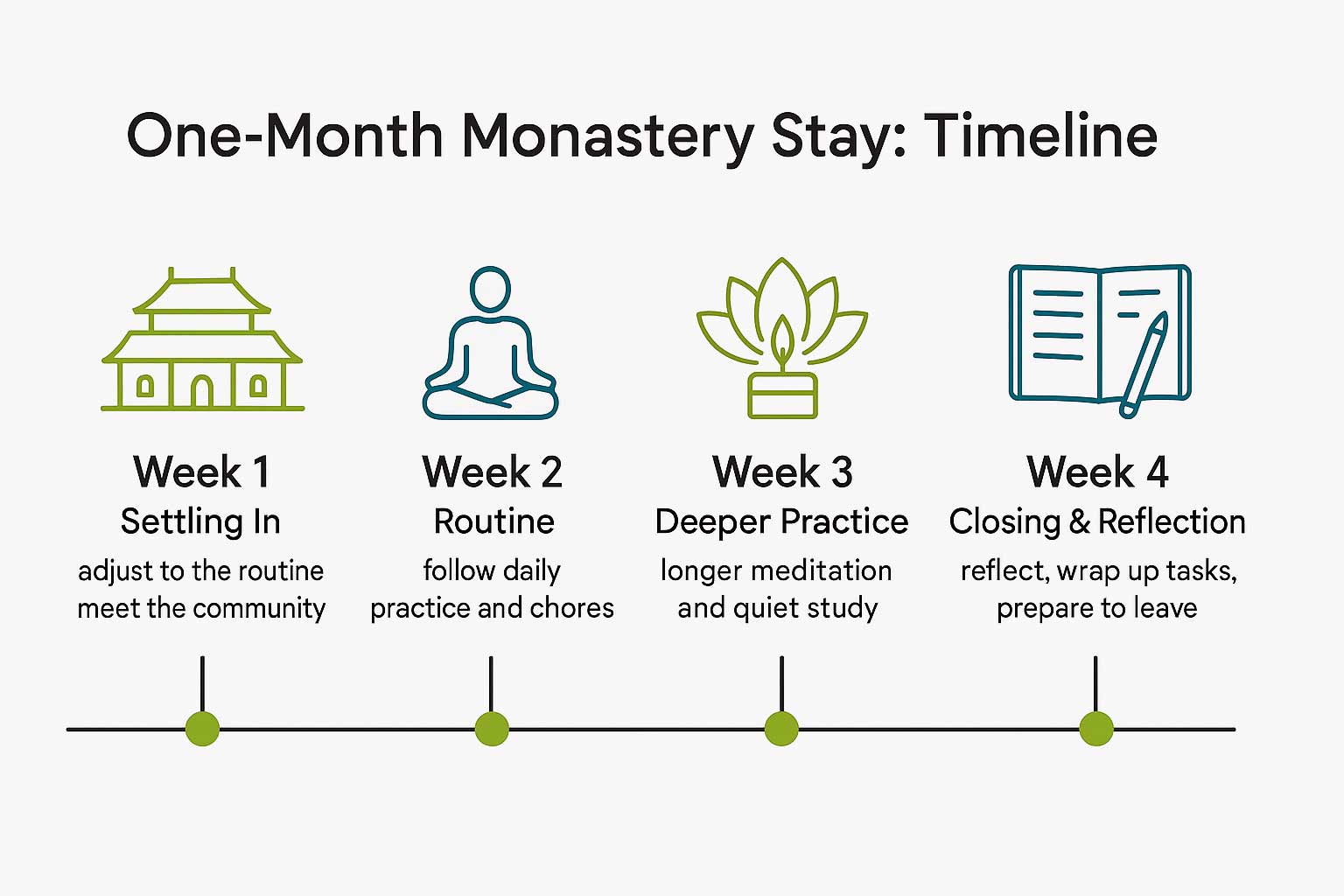
A one-month stay in
a Buddhist monastery is ideal if you want something more profound than a short retreat
but are not ready for long-term ordination. One month allows you to experience the full cycle of
monastic life without having to put your entire life in Germany on hold.
In Nepal, you can choose a four-week course at a place like Kopan Monastery or join a volunteer
program that places you in a monastery near Kathmandu or in smaller hill towns. You usually spend
part of the day teaching English, and the rest of the time in prayer, meditation, and study.
In Thailand, you might join a structured one-month volunteering or “monk life”
immersion in the north, where international participants live inside or close to a temple. In Sri
Lanka, you may spend a month at a meditation centre near Kandy, combining silent practice with
light service and simple temple tasks.
Because 2026 will be a busy travel year, it is essential to contact your preferred monastery or program at least 3–6 months in advance. You need confirmation, clear arrival instructions, and sometimes a basic interview by email before your stay is approved.
How much does it cost for a German to live in a monastery
The cost of living in a Buddhist monastery is usually much lower than regular tourism, but it is
not entirely free. Most monasteries follow the principle of dana, or generosity. This means that
you give according to your ability, and the monastery uses your support to feed you, keep the
buildings running, and sustain the community.
In Nepal, daily donations of around €10–25 are common for foreign guests. This often
includes a simple room and three vegetarian meals. In Thailand, some forest monasteries do not set
a fixed price but suggest donations of about €20–30 per day for foreign visitors, or a
one-time contribution for longer stays. In Sri Lanka, some volunteer programs and temple stays may
ask for €15–40 per day or weekly contributions such as €100–110, including food and
accommodation.
For a German traveller, a simple one-month stay in a monastery (excluding flights) may cost between €30 and €800, depending on the country and the program style. On top of this, you should budget for flights from Germany (€700–1,100 round trip), travel insurance, visa fees, airport transfers, and a few nights in guesthouses before and after your stay. Even with these extra costs, a month in a monastery is still one of the most affordable and meaningful ways to travel.
Please click here to get the complete details on available placement, classes, accommodation, cost, visa, airport arrival and the rest of it.
Get More Info Now »
International travel from Germany to join a Buddhist Monastery
Travelling from Germany to a Buddhist country is straightforward, but it needs calm planning.
Major airports like Frankfurt, Munich, or Berlin have connections to Kathmandu, Bangkok, and
Colombo with one or two stops.
For Nepal, you will usually fly to Kathmandu. Flight time is around 10–12 hours with a layover,
and prices range generally from €750–1,200 depending on the season. For Thailand, you can
fly to Bangkok or Chiang Mai. Direct or one-stop flights are available, and costs often range from
€700 to €€ 900. For Sri Lanka, you will fly to Colombo, with typical prices
between €70 and €900 and travel time around 10 hours with connections.
Visas for German citizens are usually straightforward: Nepal offers visas on arrival for 30 to 90
days, Thailand offers visa exemptions or tourist visas for short stays, and Sri Lanka uses an
online Electronic Travel Authorisation system. Always check the latest requirements before you
book.
From the airport, you can take a taxi or local transport to the nearest town and then follow the directions given by your monastery or program. Pack modest clothing, some light layers for different climates, and basic items such as a reusable water bottle, flashlight, and simple personal care products. A small offering for the monastery, such as incense or a helpful book, can be a kind gesture upon arrival.
Conclusion
Joining a Buddhist monastery volunteer program from Germany in 2026 can be a meaningful way to
step away from everyday stress and reconnect with something quieter and more profound. Whether you
are a woman, a man, or an LGBTQ+ traveller, there are monasteries and retreats in Nepal, Thailand,
and Sri Lanka that can welcome you into their daily life, as long as you come with respect and a
simple heart.
You will live with monks or nuns, share their routine, help with small tasks, and often teach
English or support their community work. In return, you gain first-hand experience of Buddhist
values like compassion, discipline, and simplicity. The costs are modest, the living conditions
are basic, and the rewards are far beyond any other holiday.
If you start preparing now, use 2026 to research, practice a little meditation at home, and build contact with monasteries that resonate with you. By the time you board your flight from Germany in 2026, you will not just be travelling to another country. You will be entering a different way of living, at least for a while, and carrying some part of that peace back with you.
FAQ
Can I join a Buddhist monastery from Germany with no previous experience in meditation?
Yes. Many monasteries and retreat centres are used for complete beginners. They will guide you step by step as long as you are respectful and open to learning.
Do I need to speak the local language to volunteer or stay in a monastery?
No. English is usually enough in Nepal, Thailand, and Sri Lanka, especially in international programs. Basic local phrases are helpful but not required.
Is it safe to go alone as a German traveller to a Buddhist monastery?
In general, yes. Monasteries and meditation centres are among the safest places for travellers. Still, always choose well-reviewed programs and keep standard travel precautions.
Published on December 1, 2025
To share this link:
Please click here to get the complete details on available placement, classes, accommodation, cost, visa, airport arrival and the rest of it.
Get More Info Now »