

How to Help the Flood Victims of Sri Lanka, Indonesia, Thailand and Asia
Last Updated: December 02, 2025
Tweet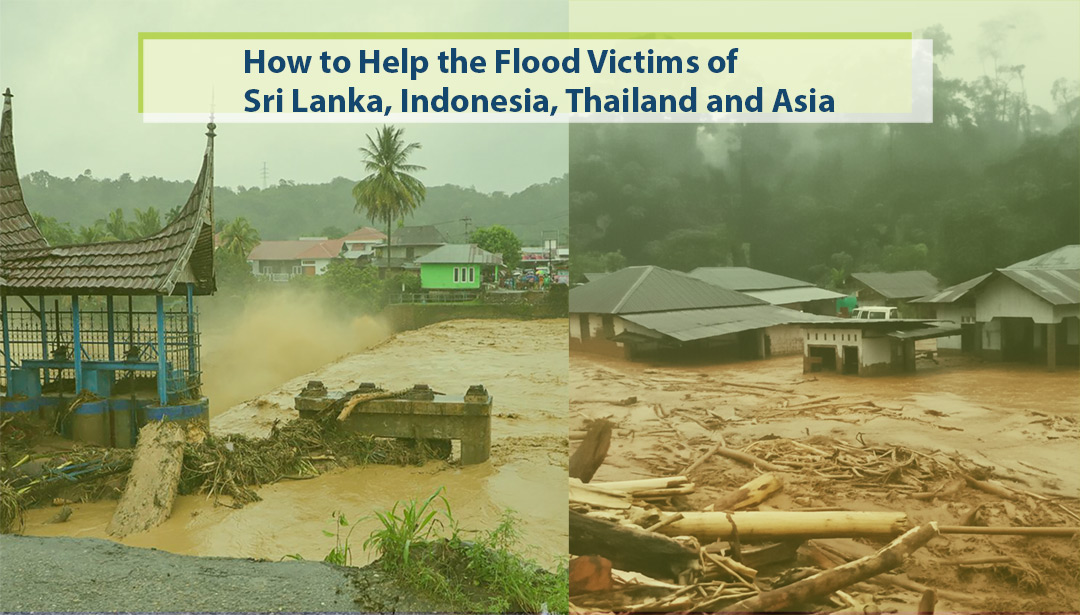
Across Asia, an unusually intense monsoon season has unleashed widespread destruction, leaving communities devastated from Sri Lanka to Indonesia and Thailand. A rare combination of cyclonic storms, deep depressions, and relentless monsoon rains has turned major cities and rural regions alike into disaster zones.
Homes have been washed away, critical infrastructure destroyed, and families torn apart as they struggle to cope with unprecedented flooding.
With at least 1,350 people confirmed dead across South and Southeast Asia, and hundreds more still missing, the scale of human suffering is overwhelming.
Millions have been displaced, living in overcrowded shelters or improvised camps, while rescuers race against time to reach isolated areas. As relief efforts expand, global solidarity is urgently needed to support the survivors and help rebuild what has been lost.
How Is the Situation Now?
The current flooding across Asia is a result of multiple cyclones striking simultaneously, compounding the effects of monsoon rains. Hat Yai city in Thailand is just one example of the hundreds of communities reeling from deadly floods and landslides.
Regions from Indonesia to Sri Lanka are facing the consequences of these overlapping storms, with entire districts cut off and critical services disrupted.
Indonesia has experienced one of the deadliest impacts, with reports of over 600 deaths in some provinces and more than 1,140 fatalities across multiple countries including Indonesia, Sri Lanka, Thailand, and Malaysia. Nearly 1.5 million Indonesians have been affected.
Sri Lanka is battling the aftermath of Cyclone Ditwah, which has caused dam breaches, widespread flooding, and the displacement of nearly 200,000 people into more than 1,200 shelters. Thailand has also been hit hard, with 138 confirmed deaths due to flooding.
Who Is Helping?
UN Humanitarian
#SriLanka faces its worst flooding in recent history – with hundreds of people killed or still missing.
— UN Humanitarian (@UNOCHA) December 1, 2025
The UN is supporting Government-led efforts, helping provide food, safe water, and shelter items ensuring aid reaches those who need it most.
➡️ https://t.co/JsSYoC1z6b pic.twitter.com/7Ru8b5UpfL
The United Nations is supporting government-led disaster responses across the region, with a particular focus on Sri Lanka, which is facing some of its worst flooding in decades. UN teams are helping coordinate relief distribution and are providing food, safe drinking water, emergency shelter, and essential supplies. Their goal is to ensure that life-saving assistance reaches the most vulnerable families as quickly and efficiently as possible.
Indonesian Red Cross
The Indonesian Red Cross (PMI) has deployed emergency teams across the hardest-hit provinces. Working alongside the National Search and Rescue Agency (Basarnas), PMI has conducted aerial evacuations using helicopters to reach flood-isolated villages. In West Sumatra’s Pelambayan subdistrict, rescuers hoisted families to safety via harness, an example of the urgent and high-risk operations that continue across the country.
Sri Lanka Red Cross Society
In the face of Cyclone Ditwa’s devastating floods, the Sri Lanka Red Cross Society has been on the ground from day one - reaching affected families, providing emergency relief, and standing by our communities in this critical moment. pic.twitter.com/mqZTD8eJHz
— Sri Lanka Red Cross Society (@SLRedCross) December 1, 2025
Since the onset of Cyclone Ditwah, the Sri Lanka Red Cross Society has been on the ground, delivering immediate relief to affected families. Volunteers have been providing dry rations, first aid, temporary shelter, and clean water. Their rapid deployment has been crucial as rising waters and widespread damage continue to endanger communities. The organization remains committed to supporting rescue operations and long-term recovery.
Thai Red Cross Society
The Thai Red Cross Society is conducting extensive relief operations across eight southern provinces hit by severe flooding. In Ranod district, Songkhla province, volunteers waded through knee-deep waters to deliver survival kits and reach isolated households. To date, they have distributed 52,699 relief bags valued at 73.8 million baht. Their disaster relief office and provincial chapters continue to coordinate with local authorities to deliver aid, evacuate families, and support recovery efforts.
How You Can Help
1. Donate to Trusted Relief Organizations
Financial contributions are the most effective way to help. Organizations such as the UN Humanitarian agencies, the Red Cross societies of Sri Lanka, Indonesia, and Thailand, and regional NGOs can quickly convert funds into food, medication, clean water, and shelter supplies.
2. Support Local Rescue and Response Teams
Local organizations are often the first to respond and have a deep understanding of community needs. Consider supporting provincial Red Cross chapters, volunteer rescue units, and community-based shelters.
3. Contribute to In-Kind Drives, If Coordinated
Follow guidance from official humanitarian groups before sending goods. Many now request items like hygiene kits, blankets, mosquito nets, and water purification tablets, but only through coordinated channels to avoid logistical bottlenecks.
4. Raise Awareness and Advocate
Share verified information on social media to boost fundraising efforts and visibility. Encouraging others to support relief organizations can dramatically increase the impact.
5. Prepare for Long-Term Support
Rebuilding after floods takes months or years. Continued contributions to housing reconstruction, livelihood support, and mental health services will be essential as affected nations recover.
Conclusion
The floods across Sri Lanka, Indonesia, Thailand, and other parts of Asia represent one of the region’s most severe humanitarian emergencies in recent years. With thousands dead, millions displaced, and countless communities struggling to rebuild, international solidarity is crucial.
Relief organizations are working tirelessly, but they rely on global support to sustain their life-saving operations. By donating, raising awareness, and supporting recovery efforts, each of us can play a role in helping families survive this disaster and begin rebuilding their futures.
Disclaimer: This post doesn’t offer any program of Volunteer FDIP. We are sharing this solely as a purpose of conveying this helpful information to the people who want to support Asia flood Victims and Survivors.
We hope you found our information helpful. Please share it with your friends and families:
Please click here to get the complete details on available programs, volunteer’s roles and activities , accommodation, cost, visa , vaccination, airport arrival and the rest of it.
Get More Info Now »